
OpenAI's Soft Power Play
"The ability to influence the behaviour of others and obtain desired outcomes through attraction and co-option." I like the framing of the term "Soft Power" by The British Academy, for my purposes here.1 I think it serves as a succinct explanation for OpenAI's maneuver in acquiring TBPN.2
Yes, the company which just made a big to-do about killing off "side quests" and focusing – including, most notably, killing off their video product Sora – immediately followed that up by buying a video podcast. And yes, they announced it the day after April Fools. And no, it was not a joke. And yes, everyone made that joke.
I too had to dish out my initial snark upon hearing the news. Which was surprising to the point that it's the most I've been messaged by people with varying levels of "WTF?" in recent months. But actually, thinking more about it, and reading over some of the reports and statements, I think it makes some level of sense. I'm not sure it will work the way OpenAI hopes. But it's not the worst idea to try.
First and foremost, OpenAI's CEO of... something,3 Fidji Simo actually lays it out pretty plainly in her remarks on the matter:
As I've been thinking about the future of how we communicate at OpenAI, one thing that's become clear is that the standard communications playbook just doesn't apply to us. We're not a typical company. We're driving a really big technological shift. And with the mission of bringing AGI to the world comes a responsibility to help create a space for a real, constructive conversation about the changes AI creates—with builders and people using the technology at the center.
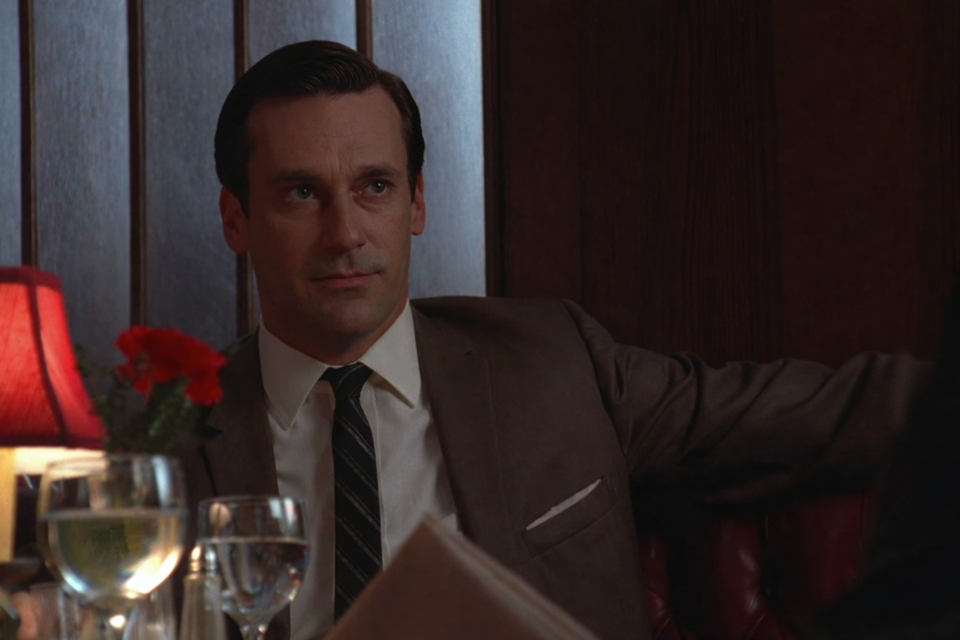
That pretty much says it all right there. OpenAI clearly does not like the way the current narrative around AI is being framed. And they undoubtedly see the trend where it's shifting even more negative as time goes on, certainly in the US. I might argue, as I have, that a lot of this has to do with the actual messengers and messaging around the technology coming out of the AI labs and companies. But that's a hard thing to change. Steve Jobs, sadly, is not walking through that door. So instead, you take a page from the Don Draper playbook and "change the conversation".
Draper's method to do that would be through advertising. And well, OpenAI has been trying that. It doesn't seem to be working. Another way? Own a media company.
That’s exactly what TBPN has built. So rather than trying to recreate that ourselves, it made a lot of sense to bring them in, support what they’re doing, and help them scale—while keeping what makes them special. A core part of this is editorial independence. TBPN will continue to run their programming, choose their guests, and make their own editorial decisions. That’s foundational to their credibility, and it’s something we’re explicitly protecting as part of this agreement.
Again, Simo says it right there. Clearly, OpenAI was thinking about building up their own media entity in-house. But while a lot of companies have tried this to varying degrees of success in the era of "going direct", Simo clearly thought it made sense to buy versus build here.4
It's an expensive buy – "low hundreds of millions," reports George Hammond of The Financial Times – certainly when you're going to throw out the actual business (which seemed to be working quite well for them, which is why OpenAI had to pay such a premium). But it's all relative for a company that just raised um, $122B.
But the other important distinction here is that OpenAI is saying they're going to leave the TBPN guys alone to do their thing as they have been with the show. Famous last words and all that, but I do believe that's the intention here because again, to me this is about soft power. That is, this isn't about acquiring TBPN to turn it into a propaganda arm of OpenAI. That would be dumb because obviously that would backfire. Instead, Simo realized that TBPN had natural alignment in their mandate to cover the tech world, and AI more specifically, more positively than many other outlets are doing at the moment.5 Spreading such gospel will help OpenAI's own interests quite naturally.
Now, there's a very real and fair question of what happens if that mandate changes. What if, say, AI starts to lead to some outcomes which are actually bad in very tangible ways for society (yes, some will say this is already happening, but I mean indisputable here for the sake of the argument)? Presumably, TBPN's independence would allow them to change their coverage and tone to meet the moment. Obviously, OpenAI – nor TBPN – thinks that will happen. And if it did, OpenAI would probably just cut the show loose.
But that sort of points to what's left unsaid here. That while TBPN may stay the same on paper, in practice, the way others interact with it may change. Is, say, Dario Amodei going to come on the show? Probably not! But that's a bit unfair since he wasn't a guest before the deal. A more interesting one is Mark Zuckerberg, who has been on the show. Will he be back? Probably not any time soon.
Other rivals will be in similar camps. Some may suck it up and go on to reach the audience. And if TBPN can indeed keep growing, fueled by OpenAI's resources, perhaps it will force the hand of Zuck and others to keep playing ball. That's undoubtedly the hope of both the TBPN team and OpenAI here. They have to know that pledge of independence or not, this deal changes those dynamics of the show. They just think they can overcome them. We'll see.
And that ties into the other potential issue here. While TBPN has built up an impressive audience in a relatively short amount of time, the reported 70k regular viewers per episode is obviously tiny compared to any number of other media outlets, let alone endless other shows on YouTube. If TBPN doesn't keep growing, the soft power playbook loses its effectiveness, fast.
Prior to this deal, the TBPN founders have been on the record noting that they didn't need to scale the show to reach a mainstream audience. That they were happy playing in their niche. Which made a lot of sense, it was a good niche that they were monetizing well, clearly! And not raising VC money gave them the optionality of staying in that niche. It was big enough.
This deal changes that equation. They no longer have to monetize, but for the soft power to work, they need to expand their reach. Otherwise they're just talking to the base over and over again. That works for Fox News, but that's a far different scale. And while there's clearly soft power at play there, it's also still a business.
This is just a soft power play.
Maybe branching into adjacencies helps them escape the echo chamber effect – they mention events as one area of continued interest – but this is all very TBD for TPBN.
All that said, I still think this is an interesting tactic to try. As Simo notes, and as we're all well aware, OpenAI is not a normal company. The implication is that normal strategies won't work for them – or at least work as well. Clearly, the narrative has kept shifting away from them. Part of that is the macro view of AI (again, certainly in the US), but part of it is also their own self-owns. TBPN will try to help with the former, while founders Jordi Hays and John Coogan will work in-house in their apparent spare time to help with the latter.
I'll just end by quoting Don Draper earlier in the same conversation:
"Your concern over public opinion shows a guilty conscience. But what good is that serving you if what is to be done is already underway?"
 M.G. Siegler
 M.G. Siegler
 M.G. Siegler
 M.G. Siegler
 M.G. Siegler
1 The term, of course, was popularized by American political scientist Joseph Nye (who also happened to be a British Academy Fellow), in his 1990 book, Bound to Lead: The Changing Nature of American Power. Nye passed away just a year ago. ↩
2 Yes, while "TB" technically started as "Technology Brothers" – in an ironic sense – "Technology Business Podcast Network" has a decidedly more professional and ESPN ring to it... ↩
3 Technically now "CEO, AGI Deployment" but it's a title that keeps shifting like Ace Rothstein's in Casino. But it's not CEO of the entire company, at least not yet ;) ↩
4 A lesson from her Meta days? ↩
5 Which throws me back to my days, many moons ago, at TechCrunch, where we were constantly levied with such a charge, but instead made it a strength. It was... a very different time, of course. And I swear this is the last time I'll point out that what we were trying to do with OMG/JK wasn't entirely different than TBPN (just more Pardon the Interruption style). ↩