
Stranger Things Have Happened Than Netflix's Theatrical Success
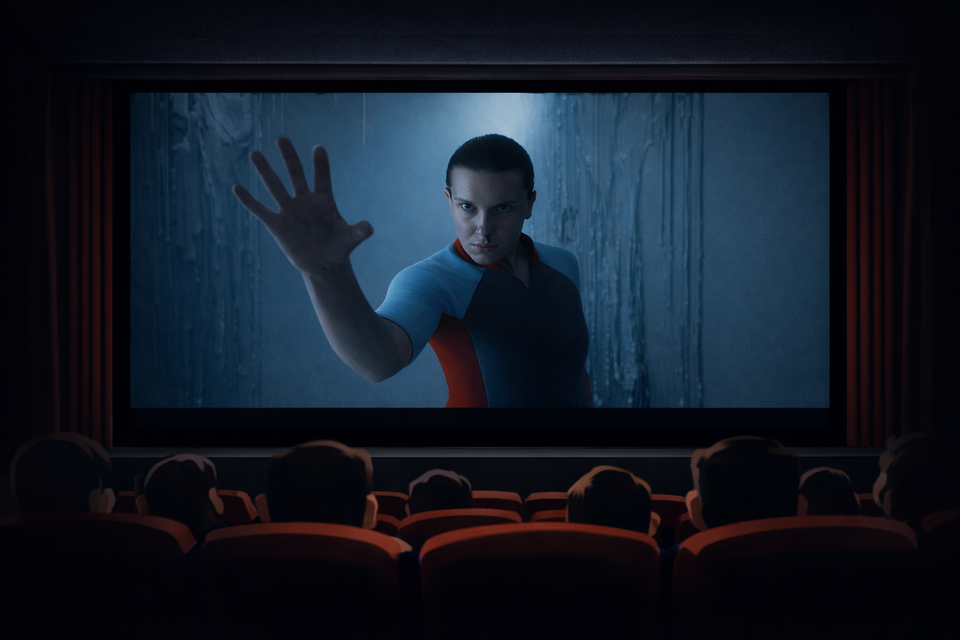
One of the bigger stories of 2025 in the technology/entertainment overlapping category that I often traverse around these parts was undoubtedly the success of KPop Demon Hunters in movie theaters. For one weekend last August, it topped the box office. And this was big news because it had already been streaming on Netflix for two months beforehand. How much did it take in? About $18M. Again, for a movie you could technically watch for "free" at home (assuming you had Netflix, which you undoubtedly did). It was a key data point in showcasing both how the movie-going experience could evolve and how Netflix's own stance on movie theaters could as well...
Netflix, of course, is now singing a very different tune when it comes to such distribution. That's obviously because they're in the midst of buying a movie studio – or trying to, if Paramount and/or the government doesn't get in the way of their deal. And a big part of that pitch is keeping the Warner Bros theatrical distribution window open for business. Hollywood, naturally, is skeptical – you would be too if the co-CEO of Netflix was saying things like this mere months ago – but again, I think it can actually make sense for Netflix as the company evolves. And now we have another data point.
Here's Anthony D'Alessandro reporting for Deadline:
Sources are telling us this morning that the Stranger Things finale cleared well north of $25M, possibly even $30M, in concession cash to movie theaters over its New Year’s Eve and New Years Day play. Of that figure, $15M was generated by the No. 1 circuit, AMC Theaters off an attendance of 753,000. By comparison, 20th Century Studios’ Avatar: Fire and Ash, the No. 1 grossing film of the season, made a combined $23.7M over New Year’s Eve and New Year’s Day.
Yes, another bit of content that you could technically watch for free from the comfort of your home just made another killing at the box office. Perhaps even slaying the mighty Na'vi of Avatar in terms of sales. Even more incredibly, that's from only around 600 locations – Avatar 3 is playing in closer to 4,000.
Granted, this is all quite convoluted to calculate because of the hoops theaters had to jump through in order to make such sales work:
Exhibition couldn’t charge for tickets to the Netflix event given the cast’s contractual terms for residuals, hence the streamer and circuits got around this by reserving seats with concession vouchers. At AMC theaters, such concession vouchers cost $20 per seat. At 231 locations, AMC had a bit more than a third of the total theater count showing Stranger Things. AMC estimates that more than half of all Stranger Things fans watched the finale in a movie theater do so at an AMC venue.
Still, it's a close-enough proxy for ticket sales to know that Stranger Things absolutely killed it in theaters – so much so that AMC had to keep adding screenings to keep up with demand. Oh yes, and this wasn't even technically a movie (though at two hours and eight minutes, it's longer than some of them!), but a television show. Whatever that means, these days.
Regardless of how you want to caveat them, these numbers are wild. And it shouldn't be too surprising. I've been arguing for years that the streaming services (and movie theaters) were just leaving money on the table by not leveraging theatrical distribution for all kinds of content, not just your typical Hollywood movie fare. As I wrote back in 2019, arguing that HBO should have debuted the final season of Game of Thrones in movie theaters:
Imagine if they ran the first episode in theaters only for the first week. Or even just opened it on a Thursday for the weekend before the Sunday premiere on HBO itself. I know I would absolutely go to see it on the big screen. As would many, many others, undoubtedly. Given the near feature-length of the episodes, I would even be fine paying full price for a movie ticket. But even if HBO “only” charged $5-$10 a ticket, how much money would they make? Tens of millions of dollars for sure. Hundreds of millions? Perhaps!
Just imagine if HBO had opted to open each of the six episodes of this season in this regard. We’re definitely talking hundreds of millions of dollars at that point. Then the question becomes: are we talking billions? Maybe not. Still, that is a lot of money for HBO to leave on the table, all for not doing much beyond some additional marketing and logistics.
The complications of selling such tickets (per above) aside, that's basically exactly what Netflix just did with Stranger Things. And it clearly worked to the tune of those tens of millions of dollars. And Thrones may very well have garnered even more support at such theaters – especially if they audience didn't yet know what a belly-flop that final season would prove to be! (I might also just note that Netflix is on the verge of potentially owning the rights to Game of Thrones along with HBO...)
Obviously, some have dabbled with such experiments in the past, but this should be an at-scale operation to take advantage of pent-up demand for certain content and the wide reach/footprint of movie theaters – many of which are partially or even mostly empty when they stick to their first-run-movie-only stances. It's silly.
For some reason we're sticking with the model from a century ago even though all the data points don't just suggest, but scream how the world has changed. That's not calling for an end of movies, it's calling for an evolution of their distribution. This too has already happened thanks largely to yes, Netflix. To put it as plainly as possible: some movies should go to theaters, but others should go to streaming.
And on the flip side, some shows should clearly go to theaters! At least for special events like premieres or finales. But depending on the show, perhaps at a regular cadence too! Who cares if they're an hour? That could actually help fill scheduling gaps at theaters...
Also, some movies that are hits on streaming should then shift to theaters for "special events" a la KPop Demon Hunters. And some hit streaming movies should get sequels that go to theaters (sort of the inverse of the sequel direct-to-video play back in the day). Some hit shows should get movie sequels (which Netflix is doing right now with Peaky Blinders). Some movies should get show sequels. Some should go to streaming, some to theaters. Some to both. Literally everything should be on the table.
Hollywood hates all of this because it's the end of the movies-must-play-in-movie-theaters religion. But again, that already died in so far as every movie made obviously – obviously – should not play in a movie theater. At least not in wide release! Blasphemy, I know. But the alternative is the death of the entire industry so...
At the same time, that doesn't mean theaters are only for blockbuster, mega-budget movies. That will undoubtedly remain the most popular type of theatrical content for obvious reasons, but breakout viral hits can be smaller too. Like KPop!
I feel as if I'm repeating myself. Because I am. But I also feel the need to keep repeating this until it's the inevitable reality. Movie studios keep releasing movies that are clearly going to bomb at the box office when they should be sending these to streaming.1 Unsurprisingly, the newer tech players were quicker to wake up to this reality, but also shot themselves in the foot perhaps because they didn't realize that Hollywood wouldn't see it their way – the logical way, yes, but also the way that goes against the past century of success for Hollywood.
And it's not like the tech players are perfect either! Netflix is sending movies right to streaming when they clearly should be playing in theaters first – like their Knives Out hit franchise, for example. And Frankenstein, which they relented on, but probably not enough!
Netflix's previous anti-theatrical stance cost them business too in the form of both movies going elsewhere to ensure a wide theatrical component of their work, but also the talent too. For example, the very creators of Stranger Things, The Duffer Brothers, bailing on Netflix for Paramount (before the whole battle for Warner Bros), supposedly in large part because of the theatrical stance! Which undoubtedly contributed to Netflix's thawing of that stance and thus, this Stranger Things big theatrical moment – which in turn is perhaps helping them make the case to buy Warner Bros!
One more thing: I particularly enjoyed the opening of the The Hollywood Reporter piece about the Stranger Things box office numbers:
Stranger things have happened before when it comes to Netflix and its often strained relationship with theater owners, but no one could have predicted the two sides would ring out 2025 as the best of frenemies.
Really? No one?...
 M.G. Siegler
 M.G. Siegler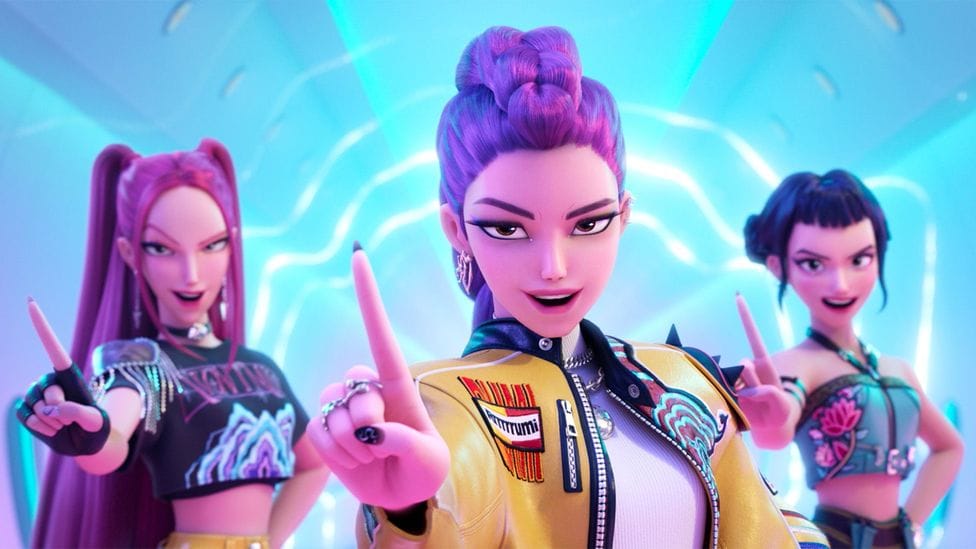
 M.G. Siegler
 M.G. Siegler
 M.G. Siegler
1 And sometimes simply opening a movie wide for a week – obviously almost always the biggest draw anyway – and the pushing it right to streaming could work well too! ↩