
Netflix's Hard 45

Ted Sarandos is done fucking around. Well, nearly.
With the endless swirl around the fight for Warner Bros, he's been making the rounds trying to make the case for why Netflix should be the winner. Well, they already are technically the winner, so it's really why they should remain the winner – both against Paramount and against any regulatory push-back. And, deal terms aside – this interview doesn't really hit on those – this is probably his best pitch yet. But I still might suggest altering his approach slightly.
Right off the bat, there's a problem:
I think it was a lot of loud voices, but not necessarily a lot of them. I think a lot of it was folks who questioned, rightfully so, our intent with theatrical because we hadn’t said anything about it. A lot of it was the emotions around that more than anything else.
Yes, that is four "a lots" in three short sentences. That's a lot of "a lots". Also, I'm not sure what to make of the brain twister how there can be both "a lot of loud voices" but also "not necessarily a lot of them". Regardless, he's both too defensive and deflecting too much here. He sort of addresses it later on when asked more directly, but Netflix – and he in particular – has talked about the movie theater business, quite a lot. He can argue semantics (as he does in a later question), but there's far too much smoke over the years for there to be no fire here. He should just own it and say something like:
He does mention the idea of seeing Warner's actual theatrical numbers changing his mind later on, and it's a great, compelling answer. People are allowed to change their minds – and it's especially good and reassuring if they do so when presented with new facts. That's the sign of a good leader, so he should tie that into the broader question about his past statements on the matter, not be defensive about such statements.
I do love that he doesn't shy away from talking about Paramount directly:
If you take a beat and think about who’s been building and who’s been collapsing, it’s the best news possible. When we buy the studio, we’ll be releasing more movies together than we were separately. Our forecast is to grow the content spend of the combined companies several years out. So it’s really good news for the town that we’re going to continue to grow the business.
On the Paramount side, between the $3 billion that they’ve already cut and the $6 billion they’re proposing, those are real jobs. That’s cutting back on production. That endless search for profit by cutting people, jobs and making fewer movies — that’s not our intention at all. We need all those movies. We need all those TV shows.
This is probably Netflix's single greatest strength, even more so than the money they're offering, in their pitch – especially to outsiders. Essentially: "We're not going to cut jobs, Skydance is. How do I know that? Look at what they've done with Paramount, mere months ago." His second best argument?
I honestly think there would have been reactions like that from anyone who was going to do the deal. What people would like to see is no deal. But that’s not possible. There are two outcomes of this deal, and we have a signed deal done.
This isn't Netflix vs. Paramount – I mean, it is – but the bigger battle is this deal vs. reality. If no one does this deal, Warner Bros is going to die. Not today, not tomorrow, but eventually, slowly. It has been decades since the major movie studios could stand on their own as businesses, which is why all but Disney is owned by larger entities (and even Disney is saved by their other businesses, like theme parks and cruise ships, and for a time, cable). A stand-alone Warner Bros would not last long, and WBD is going to split off the cable division which is still bringing in money so... There needs to be some deal done here. Hollywood seems to think Netflix is the worst option, but, plot twist: they might actually be the best option. By far.
After two great answers as to why they decided to do this deal – again, essentially admitting they were wrong in some of their assumptions and realizing that actually their business could augment and accelerate Warner's in ways – we get another small setback. When Sperling (rightfully) pushes back, noting that people are still skeptical of Netflix's actual commitment to movie theaters here, Sarandos gets weak again:
I understand that folks are emotional about it because they love it and they don’t want it to go away. And they think that we’ve been doing things to make it go away. We haven’t.
Again, I wouldn't be defensive there, it seems disingenuous. I would say something more along the lines of:
But I'm also slightly taking this bit out of context, because his very next line is meant to be the knockout punch:
When this deal closes, we will own a theatrical distribution engine that is phenomenal and produces billions of dollars of theatrical revenue that we don’t want to put at risk. We will run that business largely like it is today, with 45-day windows. I’m giving you a hard number. If we’re going to be in the theatrical business, and we are, we’re competitive people — we want to win. I want to win opening weekend. I want to win box office.
There's obviously still a slight equivocation with "largely" but that seems fair, there are going to have to be some things Netflix tweaks – and there are obviously some things that Netflix should tweak – but one of them is not the 45-day theatrical commitment for Warner Bros movies,1 as he makes clear: "I'm giving you a hard number."
That is his updated pitch directly to Hollywood and theater owners. It's less an olive branch and more just a full-on offering: Netflix will commit to a 45-day window. Not 17 days, as has been reported by Deadline and others. 45 days. Exactly what the theater owners are asking for, obviously not coincidentally.
Sperling pushes back again, noting Sarandos' "outmoded idea" quote from not even a year ago. This seems to annoy him, as he thinks everyone has read his quote the wrong way. Again, it's far too defensive. He just should have answered with some variation of the above quotes I've already laid out, or simply said he should have given a better answer at the time – a tactic he's used in the past – rather than arguing semantics.
When pushed again on the notion that Netflix has led fewer people to leave their houses to go to theaters, Sarandos gives a good answer:
You have to give them something to watch. And I think we’ve got to take ownership of the idea that when people are excited to go out and see something, they go. You’ve seen it in some really nice upside at the box office this year. You’ve seen it in our “Stranger Things” finale experience. You saw it in our “KPop Demon Hunters” experience with people. You give people a reason to leave the house, they will gladly leave the house.
This is good because yes, Netflix saw unquestionable success with those efforts. And it shows that they've been evolving in their thinking, even ahead of this Warner Bros deal – yes, something which someone – cough, cough – predicted... Beyond the Warner Bros movies continuing in theaters, Netflix could actually help the industry by continuing to push these outside-the-box experiences.
I would say one of the other myths about all this is that we thought of going to the theaters as competition for Netflix. It absolutely is not. When you go out to see a movie in the theater, if it was a good movie, when you come home, the first thing you want to do is watch another movie. If anything, I think it helps, you know, encourage the love of films.
I did not get in this business to hurt the theatrical business. I got into this business to help consumers, to help movie fans.
Yes, this is a good response. Less good:
Do you think theater owners believe that?
I’ve got a great relationship with theater owners.
Way, way, way, way too flippant. Come on, Ted. Keep your head in the game. This response gives Sperling the rope to put around his neck with the fact that the theater owners group just went to Congress to ask them to stop this deal. "Great relationship" alright! But Sarandos comes back strong:
Like I said, there’s only two outcomes of this deal. We’re going to be the buyer who keeps Warner Bros. running, releasing movies in theaters the way they always have. That keeps HBO completely intact. It keeps Warner Bros. television, producing television, and it creates jobs.
At the end of the day, that may be the argument that actually wins over Hollywood and allows this deal to happen. It's still very much up in the air, and they're going to have to start moving the messaging heavily around the actual competition being YouTube – which it is – but they're nearly there on the talking points now. They just need Ted to fully lock in and stop being defensive. Funny is fine though:
Will you relocate Netflix from its base in Hollywood to the Warner Bros. lot in Burbank? Will you be sitting at the famous desk used by Jack Warner, a founder of Warner Bros.?
I’ll probably have a space in both. Probably neither of them will be Jack Warner’s desk. But it is a beautiful desk.
Tell the truth, you’re doing all this for the desk?
It’s mostly for the desk.

Update February 27, 2026: And it's over, with Paramount upping their bid, Netflix has walked away...
 M.G. Siegler
 M.G. Siegler
 M.G. Siegler
 M.G. Siegler
 M.G. Siegler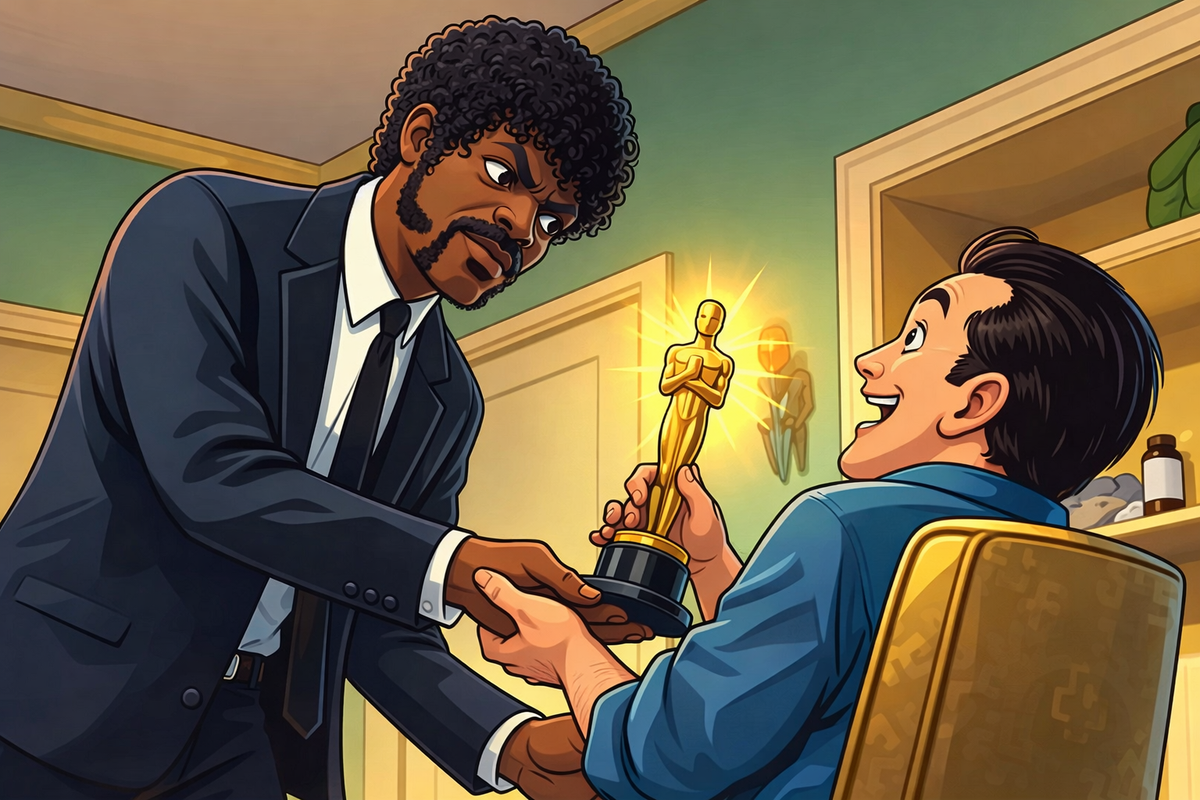
 M.G. Siegler
 M.G. Siegler
 M.G. Siegler
1 I might just point out there's wiggle room here in that he's committing to this window for Warner Bros movies and not necessarily all Netflix movies. But I think that's fair. If it works out well for Warner Bros movies, Netflix may want to use the same window for some of their own. And if not, well... not everything has to be a Warner Bros movie! ↩