
Yahoo Scouts a New UI Path for AI
 David Pierce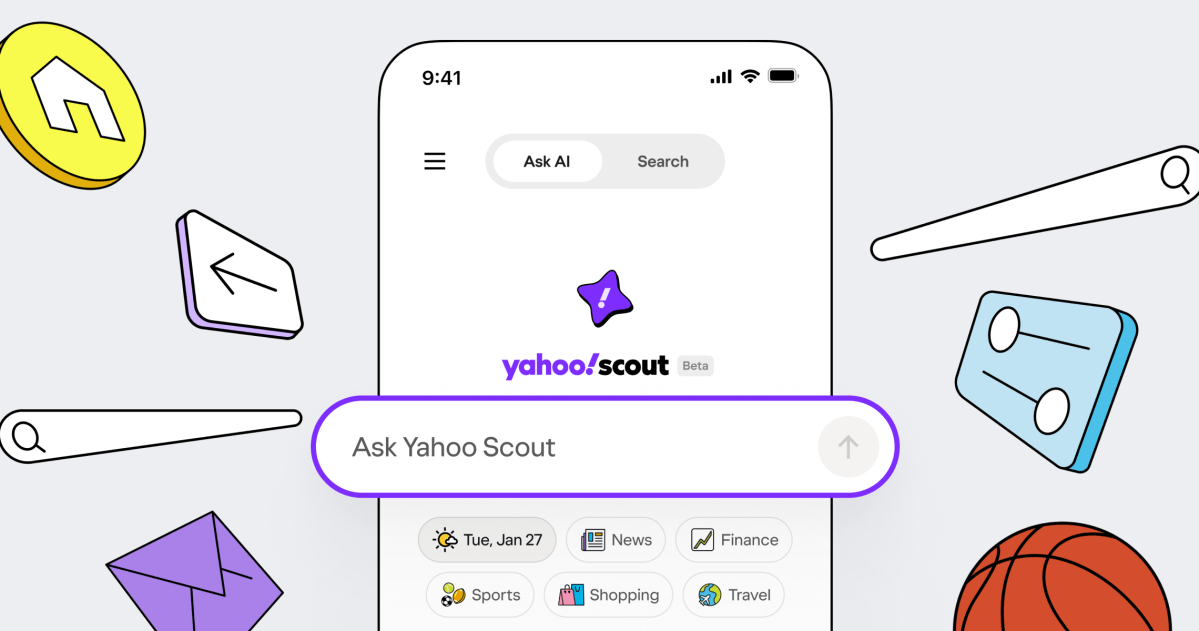
One sort of odd thing about our current AI chatbot revolution: every service looks basically the same. Beyond the textbox, the outputs for ChatGPT, Gemini, Claude, and the like are mostly just a stream of words with some light formatting for better legibility. Well, I suppose Claude's responses are more beige, quite literally, so there's that. You get why they've all coalesced around this same basic template, and yet there's also clearly some room for improvement. I just didn't expect it to come from Yahoo!1
Yahoo’s big AI play is, in many ways, actually a return to the company’s roots. Three decades ago, Yahoo was known as “Jerry’s guide to the world wide web,” and was designed as a sort of all-encompassing portal to help people find good stuff on an increasingly large, hard-to-parse internet. In the early aughts, the rise of web search more or less obviated that whole idea. But now, Yahoo thinks, we’ve come back around.
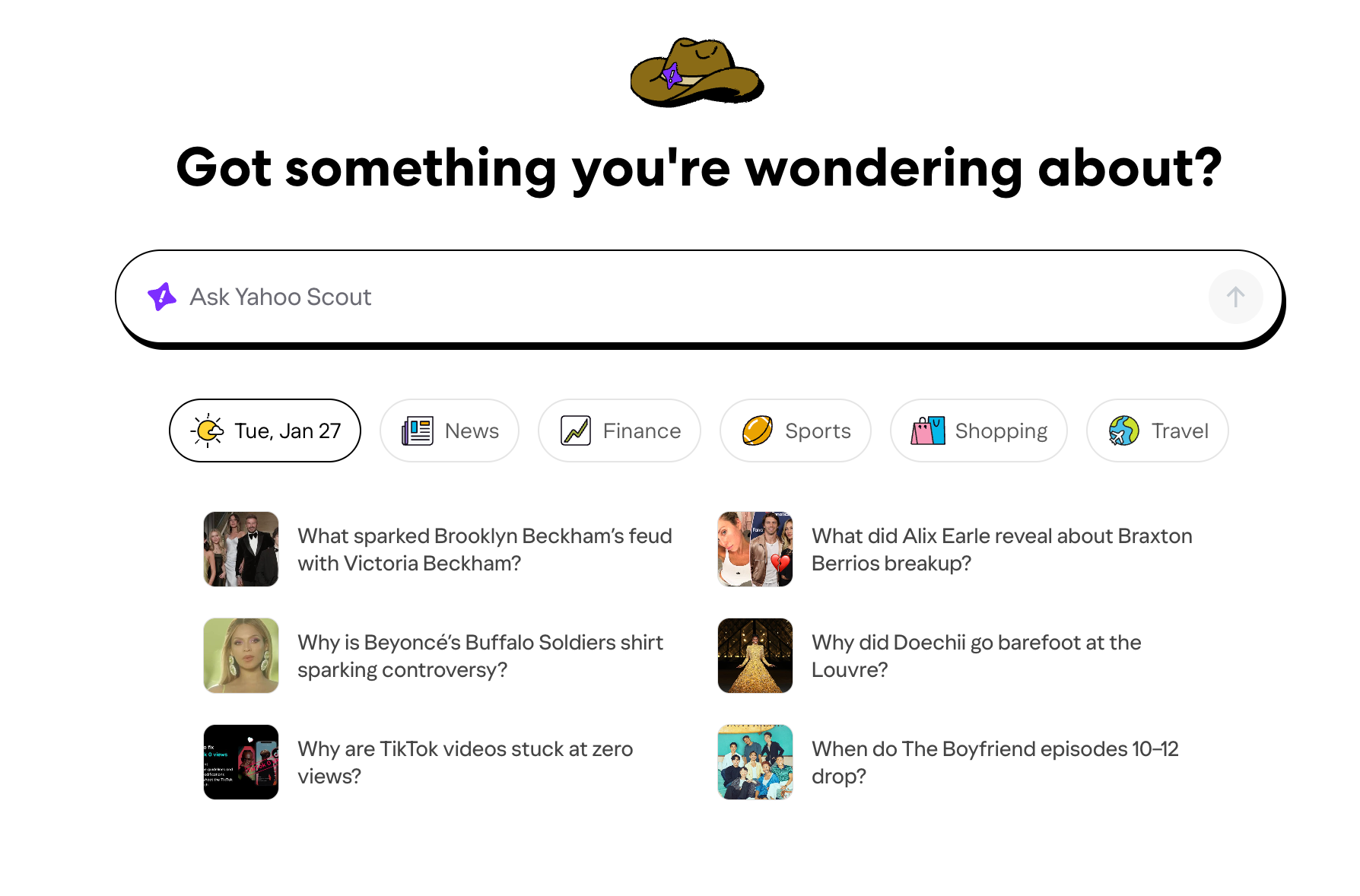
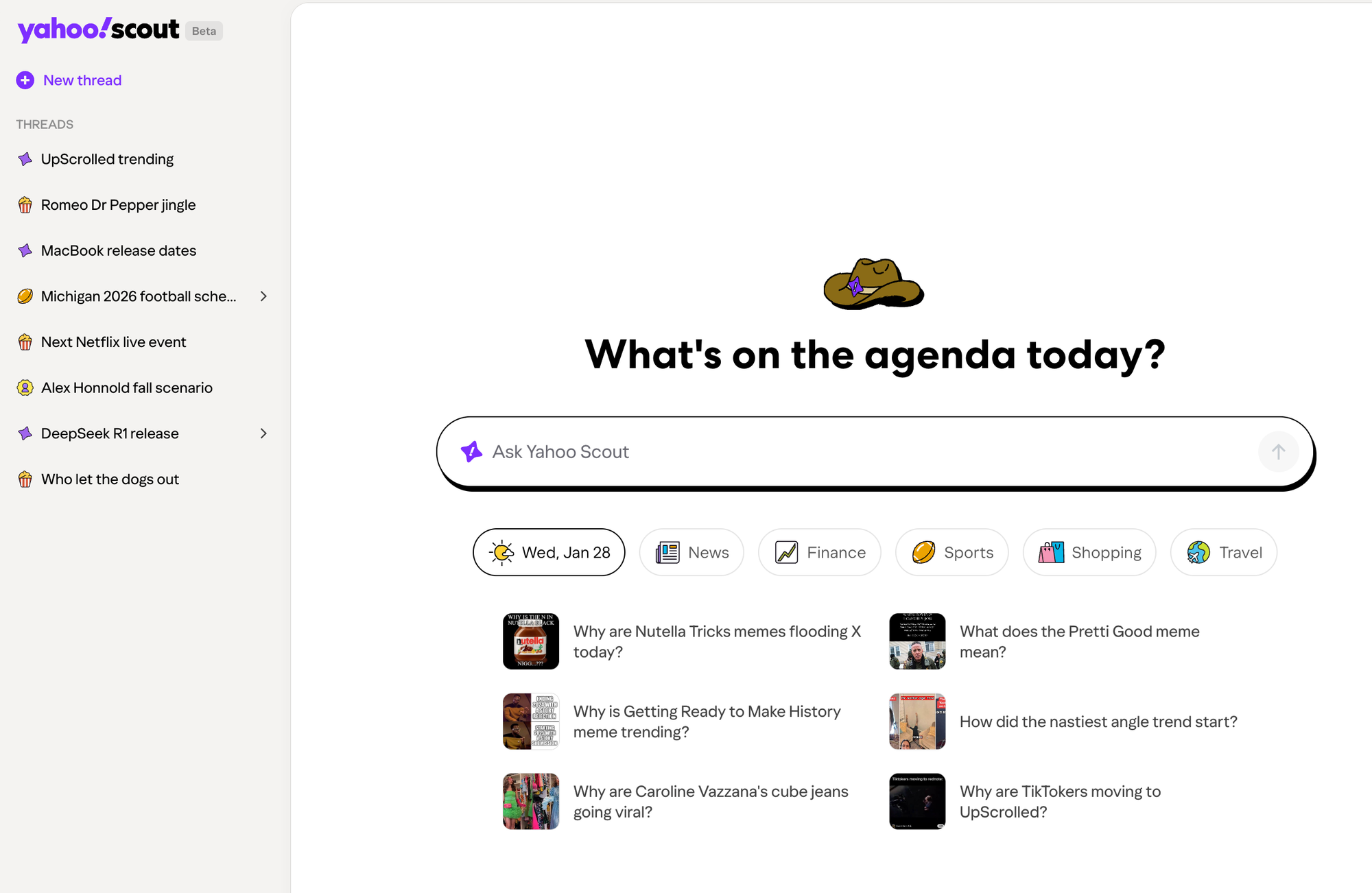
With a new product called Scout, Yahoo is trying to return to being that kind of guide to the web — only this time, with a whole bunch of AI in the mix. Scout, in its early form, is a search portal that will immediately be familiar if you’ve ever used Perplexity or clicked over to Google’s AI Mode. It shows a text box and some suggested queries. You type a question; it delivers an answer. Right now Scout is a tab in Yahoo’s search engine (which, CEO Jim Lanzone likes to remind me every time we talk, is somehow still the third-most-popular search engine in the US), a standalone web app, and a central feature in the new Yahoo Search mobile app. Yahoo calls it an “answer engine,” but it’s AI web search. You get it. And so far, it’s the most search-y of any similar product I’ve tried. I like it a lot.
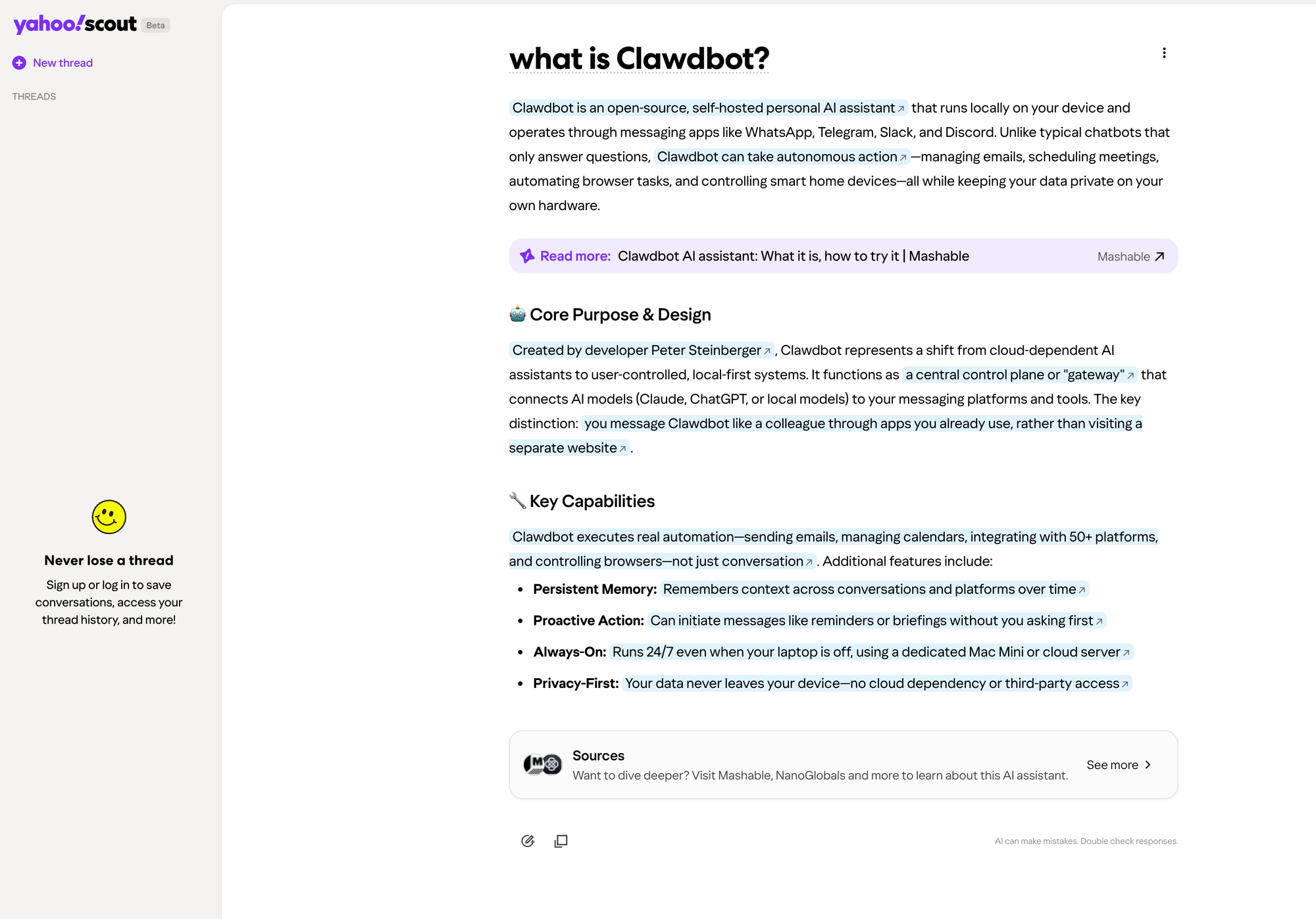
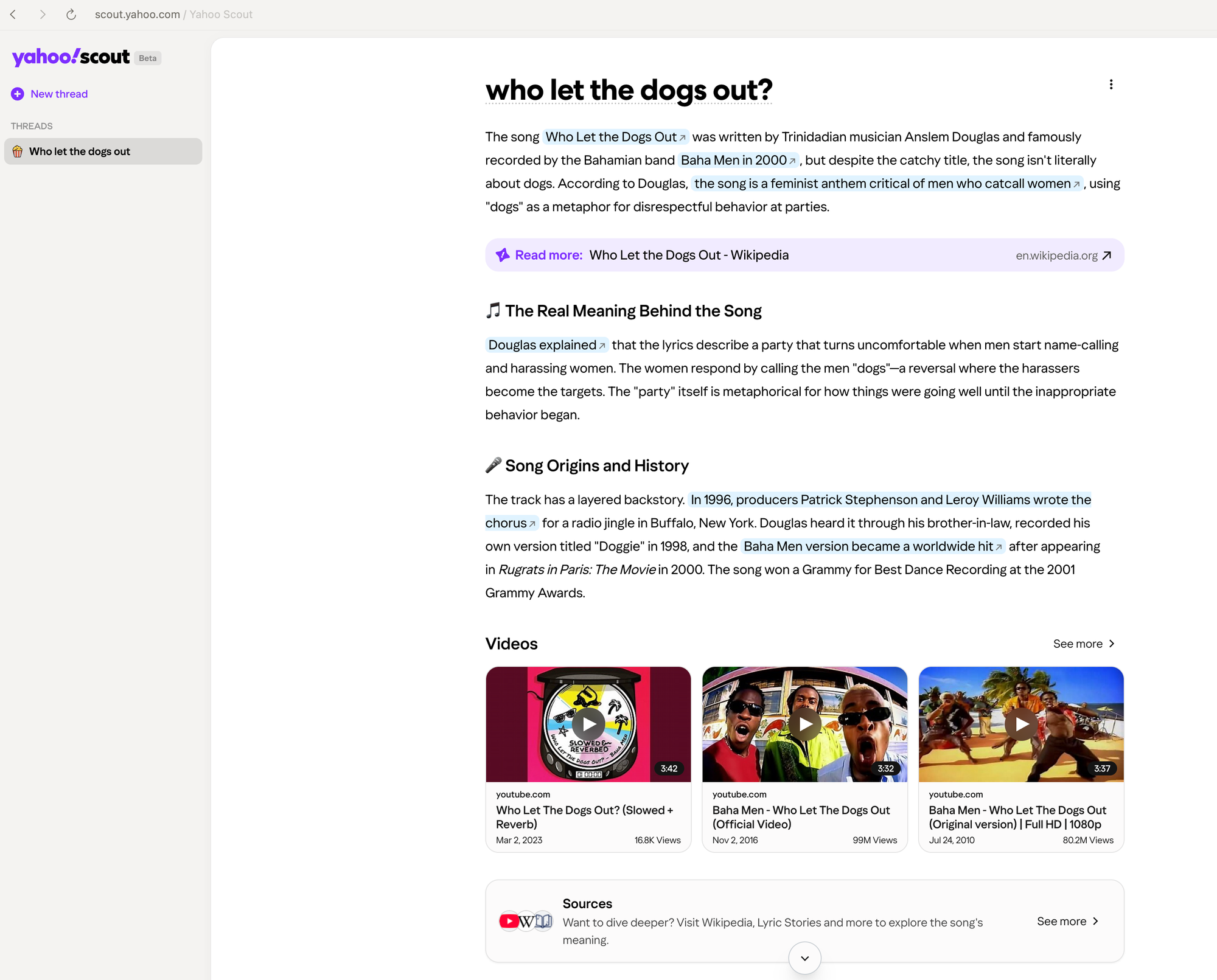
Trying Scout out for the past couple of days, I actually like it quite a lot too! Beyond simply spiffying the outputs up with the use of more color (and emojis), the way they handle links feels a bit better too – rather than being citation-style at the end of blurbs, they're more hyperlink-style, flowing with the text. I could see why some might like this less – visually, it breaks up the reading flow a bit – but I find it decidedly more web-native. As such, I suspect it will lead to a lot more clicks out, back to that web.
And while it also feels a bit weird for Yahoo to be the one pushing new boundaries (or, I suppose, restoring some old boundaries, in a way), it also makes some sense both given their history – which put them in position to still be "the third-most-popular search engine in the US" – and the fact that they do own and control a bunch of still highly-used products with unique data sets: Yahoo Sports, Finance, Weather, etc. If the big AI players are creating more of a canvas for what replaces web search, Yahoo is sort of doing what web search would look like if it was built around AI.
Even "AI Mode" within Google feels more like shoving Gemini – a full-on "native" AI experience in line with its peers – into Google Search. This feels different. Maybe even a bit better?
And this old/new UI might even work a bit better when it comes to monetization? Again because I think it will entice more people to click. In other words, it could help the old monetization methods remain intact, or at least in a better position than the other AI players, which I think will need to figure out new formats and methods of measuring new metrics that matter.
One thing Yahoo isn’t doing? Building its own foundation model. For one thing, Lanzone says, doing that is very expensive. “We think we can best serve our users not so much with the model,” he says, “but with the grounding data and the personalization data that we can add on top of other people’s models.” Scout is based on Anthropic’s Claude model, and what Feng describes as “Yahoo content, Yahoo data, Yahoo personality.” Much of the web-search data comes from a partnership with Microsoft and Bing, as it has for many years.
That could also help Yahoo here in the long run if and when those models become more commoditized. And they already have the experience of outsourcing the "core" work in Search to Microsoft, as noted. Of course, that reliance on Claude (and still Bing) could come back to bite if Yahoo is really just a wrapper around AI and Search.2 What's the moat there beyond brand-awareness and maybe some of that smaller proprietary data from their own services? The long-term play would have to be to use that small moat to lever into a bigger one on the back of better monetization. But it's just way too early to know if and how that will play out.
Still, kudos to Yahoo here. Scout is a fun attempt to think a bit differently about AI results, while in many ways, thinking about the past.
 M.G. Siegler
 M.G. Siegler
 M.G. Siegler
 M.G. Siegler
 M.G. Siegler
1 Exclamation and all! ↩
2 Still, Bing couldn't get Google to dance, could Yahoo?! ↩