Sometimes It's Too Slow
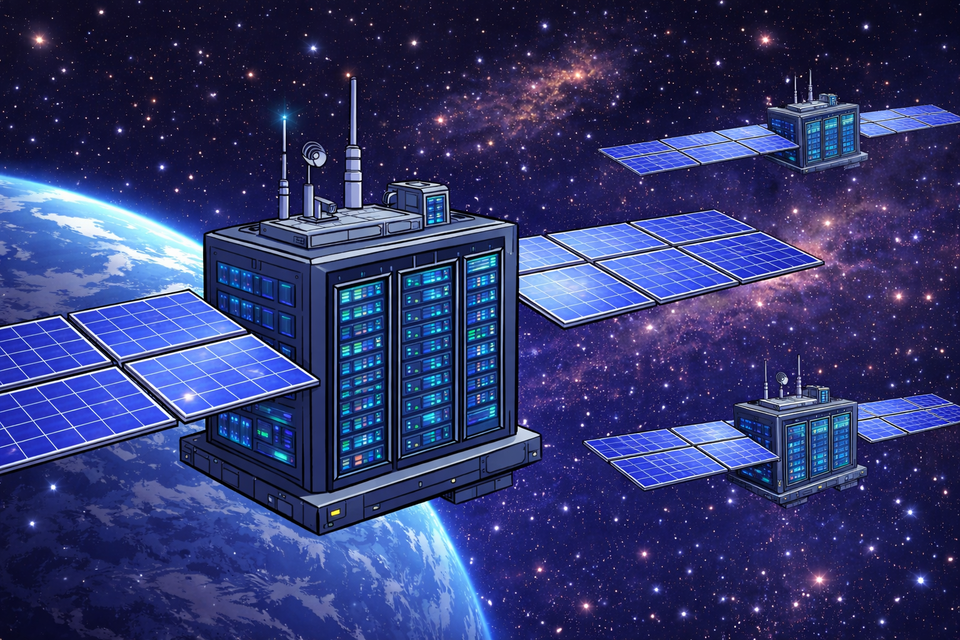
I mean, he just sort of says it. "You can mark my words. In 36 months – but probably closer to 30 months – the most economically compelling place to put AI will be space." It's about 4 whole minutes into a nearly 3 hour long podcast, when Elon Musk makes his proclamation. Of course, it was one he's made before, in his own post announcing the merger of SpaceX and xAI. But the whole "mark my words" bit feels pretty definitive.
Such statements are nothing new for Elon Musk. I'm reminded of the old Douglas Adams quote, "I love deadlines. I love the whooshing noise they make as they go by." To be honest and clear, Musk has done some incredible things. Obviously. But he almost has never done them on time – at least the initial timelines he has given. And there are plenty of timelines that we're still waiting on. Getting to Mars, to name one. And that one is top of mind as it seems like it's going to be further delayed.
Look, we all get the strategy of "dreaming big" and how that can push and inspire people. But this whole "data centers in space" thing seems less about that and more just a way to get shareholders excited about a merger right now, but also potentially public investors coming up. Is this notion self-serving? Yes. Incredibly so. Musk is trying to leverage the (absolutely massive) advantage he has here.
At the same time, he probably isn't wrong in noting that building in space will be easier from a regulatory perspective. Which is a sort of wild sentence but still not crazy? And it's perhaps ultimately the only longer-term viable path. But it will also be harder, shorter-term from about a million other perspectives...
I just feel like it's worth being actually intellectually honest here.1 It's not that we shouldn't try all of this. It's that we should try, at least on some level, to still be realistic.
The reality resides in another quote, this one from one of Musk's famous foils, Bill Gates, "Most people overestimate what they can do in one year and underestimate what they can do in ten years."
36 months from now is early 2029. And 30 months is mid-2028. Now there's actually quite a bit of wiggle room in what Musk is saying here – "economically compelling" is decidedly not "most AI data centers will be in space". But even the suggestion that it might be cheaper to do data centers in space at that point will likely be folly. Maybe he gets away with using "compelling". But I think on Gates' scale, it's a pretty clear overestimate of where we'll be in a few years, while at the same time it may be thinking too small over a longer-term time horizon!
Anyway, we'll see. Musk just made every reporter on the planet set a reminder for those dates. And much like his other dates and predictions, it probably won't matter as they whoosh by...
I was mainly thinking about this in a broader context, which is the current macro panic that software may be dead. Or at the very least, that SaaS businesses are over. Why? AI, of course. And it ties into the bigger picture that people are increasingly concerned that a lot of careers are about to be over due to this new technology.
Obviously, there are some justified reasons for such fears, as we're seeing even the Big Tech companies lay off thousands in the name of better "efficiency" thanks, in no small part, to AI. At the same time, it's undoubtedly ridiculous to think that this is the end of software, and all of the businesses built on the back of software.
Maybe that's a major problem in a decade. Maybe. But in the next year or two years or even three years? Probably not. I mean, just look at the current state of AI. It's both incredible in small ways and incredibly bad in big ways. There's promise but also profanity. As in, the words that will come out of your mouth if you try to task the technology with doing pretty much anything truly meaningful right now.
So while Anthropic may have new plug-ins to help streamline legal work, you're not going to fire your legal team any time soon. Again, not this year. Not next. And not the following. Wall Street can freak out about this all changing over night, but the history and reality of technology tells us that, to bring in a far more recent quote, "Sometimes it's too slow."
"For sure," as Emmanuel Macron added to drive home his point on the state of Europe and also to drive home downloads for his inevitable "Song of the Summer".
I wouldn't dare suggest that technology moves at the pace of the EU, but it often does move far slower than anyone within tech would like – or would promise. But back to Gates, that doesn't mean the visions are wrong, it just all takes longer than anticipated in the heat of the current hype.
I'm reminded of self-driving cars, promised long ago by Google as being right around the corner. Well, they're here now, but only in a handful of cities, and that took 15 years.
15 years from now, it will be 2041. It's a date that feels sort of reasonable for data centers in space. And probably even then just on a smaller scale. Sometimes it's too slow. For sure.
1 And major kudos to Dwarkesh Patel for pushing on all of this. ↩