Hollywood Cuts Off Its Future to Spite Its Present
This week was supposed to be the deadline for Warner Bros Discovery shareholders to tender their shares in support of Paramount Skydance's (hostile) bid for the company. Paramount clearly doesn't feel great about the proposal (after losing a fast-track bid to get more information on Netflix's offer for Warner Bros) so they're likely pushing out the date (again). At the same time, Netflix reports their Q4 earnings tomorrow and alongside that, they could formally switch their bid to be an all-cash offer, more closely matching Paramount's structure. The fight continues...
But in some ways, the fight is almost aside from the larger point. That is, Hollywood hates both of these deals. Because they don't want to see one of their iconic studios acquired. That is a foolish stance that would ultimately hasten the decline of Warner Bros and eventually lead to its demise.
Those are the real stakes here. Which everyone outside of Hollywood seems to realize, and yet few inside of Hollywood do.
I've made this point a number of times around this deal, but I felt the need to more clearly spell it out. Because every day brings a new headline or interview which makes it clear that Hollywood is living in a dream world. Regardless of who Warner Bros ultimately moves forward with, they're hoping for regulators to step in to block the deal. Again, it's silly. No, it's stupid.
If no deal happens and Warner Bros Discovery moves forward with splitting off their cable assets later this year, it will leave the studio extremely vulnerable. While the newly spun-out Discovery assets would assume a lot of the debt that lingers from the previous deals the company made – notably the tie-up with Discovery itself, unburdening previous parent AT&T – it would also take about half of the profit that the currently combined company makes. Warner Bros, the studio, is coming off a banner year. If next year is less "banner", there could be some real problems there...
But even if the studio and HBO Max keep performing, this remains a relatively small company that's going to have vultures circling to swoop in. And, in fact, an acquisition was the entire point of the spin-out. CEO David Zaslav wanted to make Warner Bros a more attractive target to deep-pocketed buyers. Knowing that, Paramount, also a relatively small company – far smaller than WBD, actually – pre-empted the spin-out. It was simply the only way they could compete for the company. But they undoubtedly didn't anticipate this level of interest from Netflix. Or that WBD would agree to a deal for just the studio ahead of the spin-out.
Anyway, the point is that someone is going to be buying Warner Bros. This was always the plan, and killing these deals just removes two would-be suitors – suitors who, by the way, actually have interest in making movies (and television). Without these two around the table, the remaining would-be acquirers, are either going to be Big Tech or private equity. Is that really what Hollywood is hoping for here? A private equity deal that reeks of "synergies" and cost-cutting galore, to set the studio up to likely flip again down the road? A real Hollywood ending.
Of course not. But they're living in this fictional land where they think Warner Bros will continue as a stand-alone entity. That's not reality. That's not happening. So to beat the dead horse: if these deals don't happen, someone else buys Warner Bros. And it will likely be a buyer far less interested in the future of Hollywood...
But, but, but Hollywood will retort: Netflix is killing us! Are they? When I look at Netflix, I see a company that is always one step ahead of inevitable curves in media creation and consumption. Hollywood won't like that framing because filmmaking is an art form. I don't disagree, but it's also a business. That's really what this is all about. And it is a business that is always morphing. And it is an industry that is always filled with existential dread about those changes.
What Hollywood should be worried about is finding the right type of buyer for one of their major movie studios. And it sure feels like Netflix checks just about all the boxes to be the best possible buyer here. They're big, popular, profitable, and innovative. But this last bit scares Hollywood because again, they're worried that Netflix will turn all movies into streaming content. The dreaded 'C' word.
That's why Netflix CEO Ted Sarandos is on his charm offensive, making increasingly declarative statements that this will not happen. That they're committed to making Warner Bros work as-is – including with theatrical releases. No one in Hollywood believes him, and that's almost reasonable given his previous statements and Netflix's previous stances. But as I've predicted well before this deal, Netflix was always going to change their tune there. Again, they're both smart and innovative. This isn't a $400B media company – twice the market cap of Disney, by the way – on their way to the first $1T media company, because they don't know what they're doing.
You cannot say the same of every other entity that has bought a movie studio.
And that's the thing, this is not some new existential threat for Hollywood. The studios started consolidating or getting scooped up almost a century ago. To the point where only Disney remains a stand-alone entity – and that's largely because they've created (or bought) other businesses to augment (and support) the studio. Many of the studios have changed hands, usually amongst conglomerates, multiple times.
With that in mind, it's rather insane that Hollywood opposes a deal here.
Is Netflix (or Paramount, for that matter) going to continue doing things exactly as Warner Bros has in the past? Undoubtedly not, but other parents of Warner Bros in the past have changed strategies multiple times as well. With Netflix, there's a least a shot at some innovative new approaches and strategies.
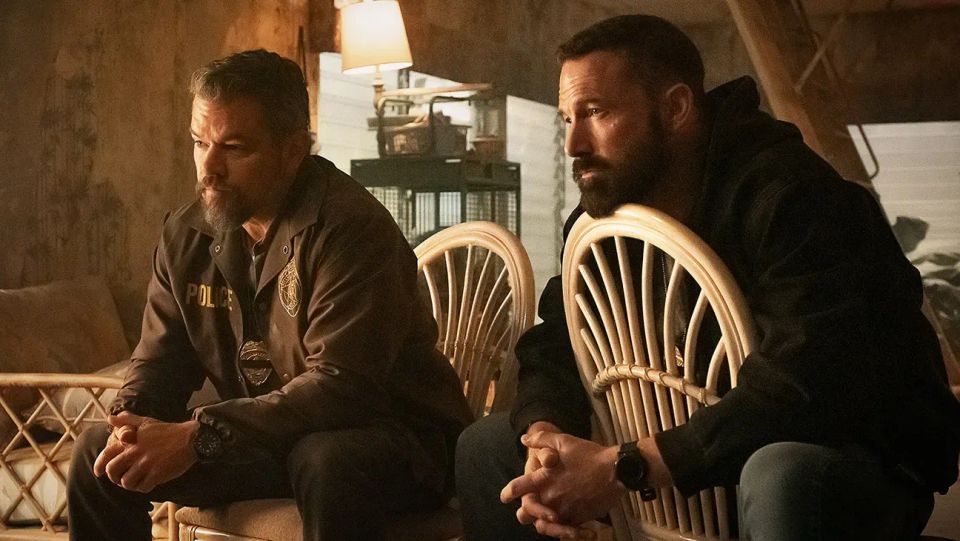
This past weekend, I watched The Rip, the new Matt Damon/Ben Affleck movie that debuted on Netflix. Yes, on the streaming service, not in a movie theater. But that was undoubtedly the right call because the movie undoubtedly would not have been a huge hit at the box office. It may have done okay on the back of its stars, but it was never going to be a blockbuster. It's just not the type of movie that fits that mould these days.
Hollywood hates that too, but again, it's reality. And it has long been the reality of the theatrical business. It's a business mostly driven by the big-budget giant tentpole movies and augmented by some breakout hits with far more modest budgets. The Rip is neither. With a budget reported to be around $100M, it would need to make around $200M at the box office just to break even (after the theaters take their cut).
That was not going to happen.
But on Netflix, a movie like this can be a hit. It's a movie with known stars that the service can serve up to their members who are most likely interested in such fare. And, in fact, for the first time, Netflix is allowing a movie to be aligned with becoming a hit, financially. Damon's and Affleck's Artists Equity production company got Netflix to agree to pay a bonus to everyone working on the movie if it hits for the service.1 We don't know those exact metrics and terms, but it's a big deal for Netflix as historically, they've not done any sort of "backend" deal – in part because those have historically been based around box office results, which again, Netflix hasn't historically had in any meaningful way. That probably changes with the Warner Bros deal, but again, even this deal is slightly changing the stakes and structure.
And that should lead to more movies on Netflix taking chances – and hopefully leads to better content.2 Which, yes, is subjective, but has long been hung around Netflix's neck with their films in particular.
Now, the counter to the above would be the other bit of news coming out of Damon/Affleck with regard to Netflix: that the studio pushed them to make structural changes to The Rip that would result in people sticking around early (i.e. not burying the big action in the second and third acts), but also to keep reiterating the plot in dialogue for the viewers who may be watching while on their phones.
I'll pause while Hollywood collectively pukes in their popcorn here.
I tend to think the emphasis should be on making movies (or shows) that are gripping enough to rip people off of their phones – a point which Affleck makes as well in their interview with Joe Rogan, where the above idea is discussed.3 But this is also about the current reality: a lot of people who watched The Rip this weekend did so while on their phones. Netflix is simply aiming to play the game on the field, as it were...
Anyway, I'm too in the weeds now. The point is that Netflix is the one company best poised to succeed in the future of Hollywood. At least right now. And the fact that they're trying to buy one of the major studios should be viewed as a very good thing for the industry, not a bad thing, let alone the end of the world. Because the alternative is probably private equity buying the studio if one of these deals doesn't happen.
Good luck with that, Hollywood.
Update February 27, 2026: And it's over, with Paramount upping their bid, Netflix has walked away...
 M.G. Siegler
 M.G. Siegler
 M.G. Siegler
 M.G. Siegler
 M.G. Siegler
 M.G. Siegler
1 Coincidentally, one of the founding partners at Artists Equity is RedBird Capital – the PE firm run by Gerry Cardinale, which is also the key partner on Paramount Skydance's bid for Warner Bros Discovery... ↩
2 I thought The Rip was decent. A bit better than the typical bland "okay" movies on Netflix, but still not great. In particular, there are some real plot problems in the third act. To me, it would not have been worth the the time and money to go see it in theater, but it was a solid Netflix watch! ↩
3 Alongside Affleck's interesting points and thoughts about AI! ↩