Can Netflix Become (More Like) YouTube Faster Than...
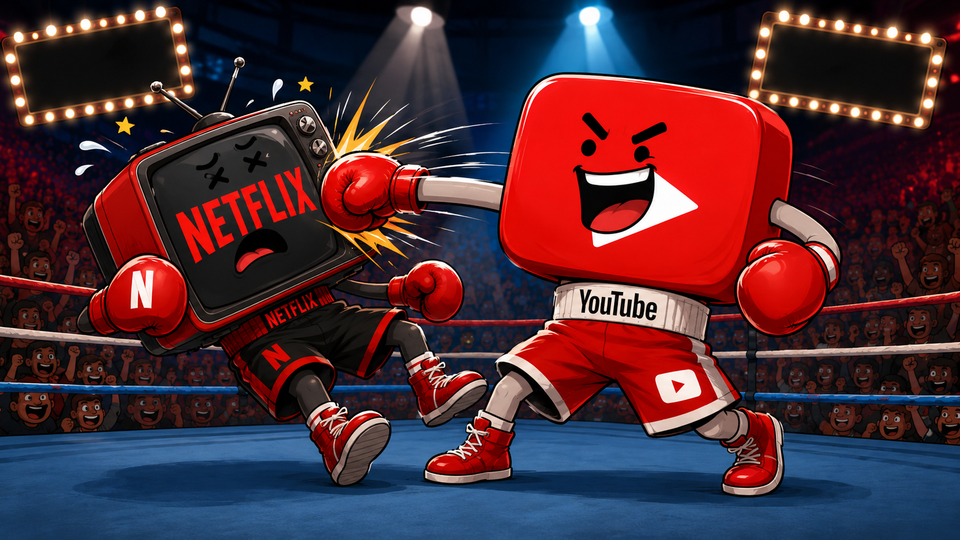
Help, I've been YouTube-pilled.
I realize this is rather a ridiculous sentence to write. Not because it's absurd to be sucked down the YouTube rabbit hole, but because it's 2026. The service launched 21 years ago. It's old enough to drink. It's the second-most-visited site in the world, only behind that of its parent company, Google. Isn't everyone YouTube-pilled by now?
And it's not like I'm new to the service. According to my profile, I joined on February 18, 2006 – just four days after its first birthday, and almost exactly nine months before it was acquired by Google. But in my 20 years on the service, I've never really gotten into it.
I mean, sure I've used it, even a lot, because again, it's the second most popular site on the internet and has been for years. But largely not in the way that I assume many have been for a long time now. Yes, I've even posted a few videos here and there – creator alert! – but mainly to embed them on TechCrunch back in the day (though only one video is still up – an iPhone 4S test from 14 years ago!).1 But I just never really got into using it as a destination. Most of my consumption came either through embeds on other sites or going there to search for something in particular, like many a 'how-to' video when I first became a father. Anyway, something shifted for me over the past year or so. I'm not really sure why, but now I find myself on YouTube constantly. Consuming, constantly.
To the point where this post has been sitting in the back of my mind for a while now. Because I think about it relative to the other streaming services. It just feels like YouTube has taken over. Again, on some level, I know I'm way late to such an observation – and increasingly, the metrics bear this out. But whereas it used to feel like Netflix was the undisputed king of streaming, it now feels like YouTube snuck up and stole that crown.
And I say "snuck up" because for years, YouTube has been disparaged by Hollywood and those other streaming services as sort of amateur hour. I mean that quite literally. They all scoffed at UGC as just sort of crap that no one actually watches. Obviously that's true for a lot of such content, but it overlooks what YouTube actually is: the perfect vessel for video on the internet. All video. While it started with UGC – well, and perhaps pirated Hollywood fare – it's now the home to pretty much everything.
It's also increasingly the birthplace of not only the next generation of Hollywood content, but the talent as well. Everyone was waiting and watching for AI to disrupt the industry, but it was YouTube that clearly has this year.
Again, it feels silly to write this. I mean, no shit! But whereas Hollywood has long been shitting themselves about Netflix – going as far as to be adamantly (and foolishly) against their thwarted takeover of Warner Bros – it feels like they're now awakening to reality: that YouTube, not Netflix, controls the market.
Netflix, of course, knows this. And they tried to argue this to their advantage in the Warner Bros pursuit. But it largely fell upon deaf ears. And now, having lost Warner Bros, it feels like Netflix is increasingly freaking out about the situation. What started as striking deals left and right for video podcasts has now branched into other shorter-form content that has proven popular on YouTube.
If the old goal was for Netflix to become HBO before HBO could become Netflix, the new goal may be for Netflix to become YouTube before YouTube destroys Netflix.
That's hyperbole, of course. Netflix isn't going anywhere. But they're also, by at least some metrics, no longer growing. Certainly not as they once were. And subscribers aside, the real concern now is about engagement. This not only helps to mitigate churn, but it's also now vital as they ramp up their advertising efforts. This has led the push into more and more live content, including, most notably, sports – a space the company previously said they had no interest in, of course.
But as history has proven time and time again, Netflix loves to backtrack. As they should! Situations change and Netflix should change along with them. Most recently, this includes their stance on movie theaters, which was obviously in part tied to the aforementioned Warner Bros pursuit, but is also continuing even with that now over (as predicted). And soon, it will undoubtedly include UGC too.
I'm not saying they're going to become YouTube, but only because that seems impossible in 2026. YouTube is already YouTube. It's not something Netflix, or anyone else, can just throw money at. Sure, they can throw the money to pick off some shows/creators here and there, but they'll never be able to get the full corpus of content that YouTube now gets – for free, I might add. We're way past that tipping point.
Netflix would undoubtedly say that they don't want all that content, just the best.2 But, if they're being honest, I think they probably would like to swap spots with YouTube right now. Netflix is currently a $300B market cap company, but their stock has been depressed over the past year, down 40+%. And they're actually not far above where they were five years ago. Yes, that's better than Disney, which is actually down 45%+ from where they were five years ago – and flat over the past decade-plus following the comedown from the pandemic streaming surge – but this is not the path towards becoming the first trillion-dollar media company.
YouTube, on the other hand, might be valued at $500B were it a standalone company these days. Thanks to Google now breaking such things out, we know that their revenue is actually higher than that of Netflix – $60B vs. $45B last year. Netflix is growing revenue a bit faster, but that's largely thanks to said advertising ramp. YouTube is already ramped and now coming for Netflix's core business, subscriptions, a business which is growing faster than Netflix's. Have I mentioned that YouTube doesn't have the cost of content that Netflix does?
Google doesn't break out YouTube's actual profits, but given the likely margin difference, it undoubtedly also brings in more profits than Netflix does – perhaps to the tune of $15B to $20B versus about $11B for Netflix last year. And that's with YouTube paying out 55% of revenue to creators, of course.
Anyway, they're both great businesses, but it feels like YouTube is increasingly in a better strategic position than Netflix is. Which is undoubtedly why Netflix keeps encroaching on their territory, even though YouTube isn't really getting into Netflix's core business – at least not yet. Again, yes they're selling subscriptions, but they're not commissioning expensive Hollywood content. They tried that back in the day and it didn't work. Even if individual shows, like Cobra Kai, did work – ironically, eventually on Netflix!
To me, the key to YouTube is now twofold. First, it's the sheer breadth and depth of the content. Again, this was once viewed as a weakness relative to Hollywood, but now it's a massive strength. There is literally something for everyone to watch, even me. Yes, this has long been the case, but in our age of streaming inundation, YouTube's focus on shorter form content I think is helping them differentiate.
Everyone now knows the feeling of being weighed down by choice, but especially if that choice means deciding which two-hour-plus movie to sit down and watch. That was always a massive time commitment – a huge chunk of your actual day. But in our era of abundant choices, it's harder than ever to justify such "spend". TV shows are easier because they're usually shorter. But you know what's usually shorter still? YouTube videos.3
Better yet, unlike when the longer form Netflix content is over, YouTube can offer you other shorter content if you have some more time. Once you finish your movie on Netflix, it seems unreasonable to think that you're immediately going to spend another two hours to watch another movie!
With that in mind, I suspect Netflix's real play with YouTube-like content will be as "filler". That is, content that can fit in the crevices of time between their main content. Maybe you just watched a movie about the Trojan War and want some more content along those lines. How about a video podcast that dives into it? Or just another shorter video on the general topic? This is where YouTube destroys Netflix right now, obviously.
They both have excellent recommendation engines, but only YouTube has the content that truly matters for real-time follow-up content consumption.
The other key aspect of YouTube is even more obvious: the UI. This has been an especially interesting revelation to me since I've long found Google's UI chops a bit lacking. But YouTube has always been pretty strong in this regard, and it feels so honed in at this point that it just makes Netflix feel and look bloated by comparison.
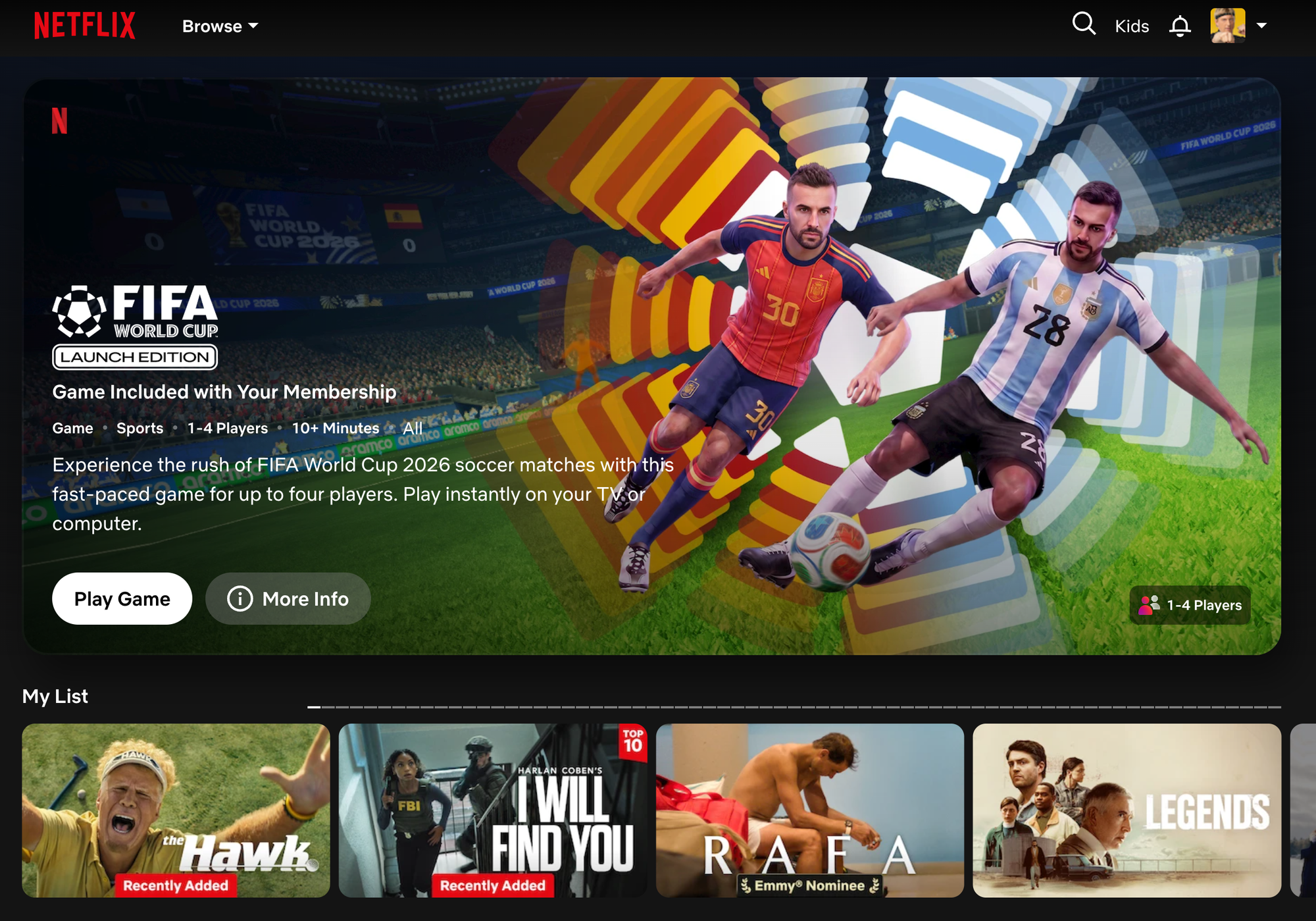
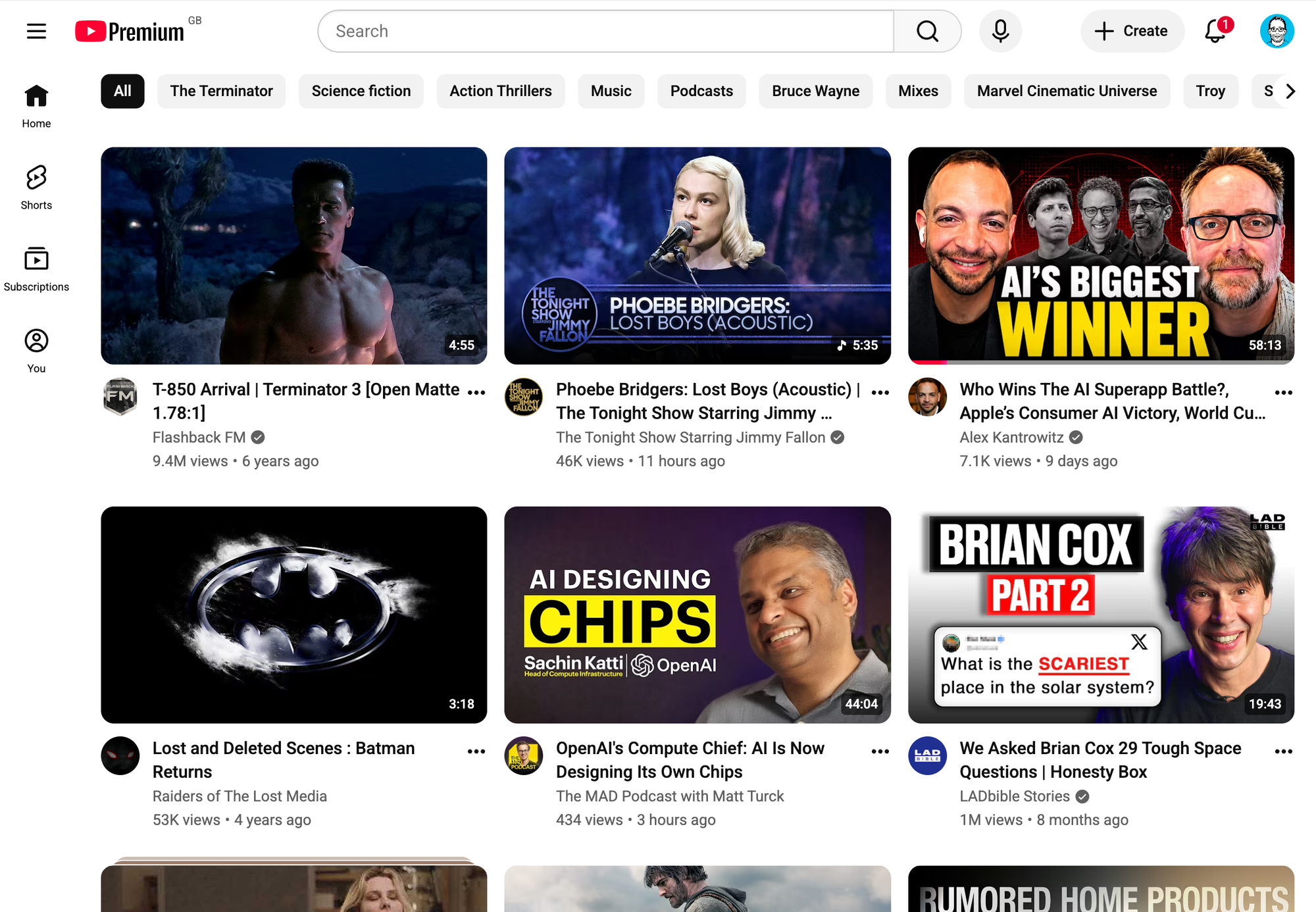
Netflix's UI isn't awful, it's just BIG. YouTube is able to cram in a lot more tiles for content you might be interested in – this is true on the web and on TVs, an area of increasing importance to YouTube, of course. As you undoubtedly know by now, YouTube is actually ahead of Netflix when it comes to viewership on televisions, which is wild because it was Netflix's home turf!
Overall, YouTube just feels faster. It feels like it's built for our current era where you can quickly and easily dip into and out of things. Netflix, for as good as they are with streaming compression and what not, still just feels like it was built for the old paradigm of content. Because it was!
This, in turn, makes YouTube feel like a great home for all types of content, including the more "premium" stuff that usually resides on my "traditional" streamers. That includes both movies – which yes, you can rent through YouTube – and shows, which you can increasingly watch via their "Channels" play, which took a page out of Prime Video's playbook.
Again, while YouTube isn't paying for their own content anymore, it increasingly feels like they won't need to thanks to these Channels. I've long wondered who would end up winning the battle to be the main streaming hub, with Apple the most obvious choice given their position in the market and previous success with iTunes. But their Apple TV set top box strategy continues to move in the wrong direction, and they're clearly not going to make an actual television set anytime soon (sadly), so it now feels like a fight mainly between Prime Video, YouTube, and Netflix.4
The latter clearly – clearly – is going to start their own "Channels" strategy sooner rather than later. It's low-hanging fruit from a retention and engagement perspective. And given their size, everyone will obviously be willing to work with them – though maybe Apple only if they agree to reciprocate and finally allow Netflix content to be surfaced by the Apple TV UI. Something which Netflix really should do! Again, engagement!
It's also clear that we're going to see Netflix strike more deals to take over the front-end of various cable TV services around the world. The early returns with TF1 in France seem very positive and again, this helps lock Netflix into that position as the main TV UI. And it's hard for YouTube to do this because they have their own, competing service in the form of YouTube TV (though yes, it remains US-only).
At some point, YouTube TV is going to get rolled into YouTube itself. Presumably the current cable deals preclude that from happening, but it's getting more and more muddled as YouTube itself takes on the Oscars, BBC, Mister Rogers, perhaps the next World Cup rights, more NFL, etc.5
I mentioned this the other day, but it long has felt like Netflix was not the new HBO because they ended up being far larger than that: the new cable TV. But actually, it now feels like this notion is almost veering a bit negative, that Netflix is akin to basic cable. It's something everyone has, but no one really loves anymore. The best content is on Apple TV and Disney+ and yes, HBO Max, as the new "premium" cable channels of the day. Meanwhile, YouTube is the new TV. The service that's free that has everything and by far the largest reach – akin to the big networks of old. All of them. Combined.
To that end, it also feels like Netflix needs to go free sooner rather than later. With the ad-tier in place, they can offer up the ultimate FAST service. It won't be for me and perhaps not for you, as the subscription tiers would obviously remain, but it can kickstart growth once again.
And that would be a hell of a lot easier and cheaper than say, buying Disney or even Lionsgate. All options should be on the table to shake things up once again, but if we all can agree that YouTube is the real rival, it's becoming increasingly clear how to best combat them.
In a way, the two are on a collision course just coming from opposite ends. Netflix from the premium side, YouTube from the UGC side. Both have been hugely successful in their own lanes, but those lanes are converging. And seemingly out of nowhere – at least to me – YouTube would suddenly seem to have the clearer path...
 M.G. Siegler
 M.G. Siegler
 M.G. Siegler
1 While we had deals with other video providers, I can't tell you how much faster it was to use YouTube to get a video up and live back in the day. This mattered at the speed of blogging... ↩
2 Are they a good judge of "best"? I would argue not... ↩
3 Yes, yes, TikTok and Reels shorter still! And that's perhaps why they're working too! And why YouTube has Shorts. ↩
4 Especially with Roku now going to Fox... ↩
5 Where Google TV, a service which has pivoted about a half dozen times over the years but is currently the software that can power smart TVs, as well as their own set-top box, fits is another matter. I guess it continues as-is to try to be more of a "Switzerland" where YouTube is just one option, but if YouTube really does take over TV... ↩