
YouTube Beats AI to Disrupting Hollywood
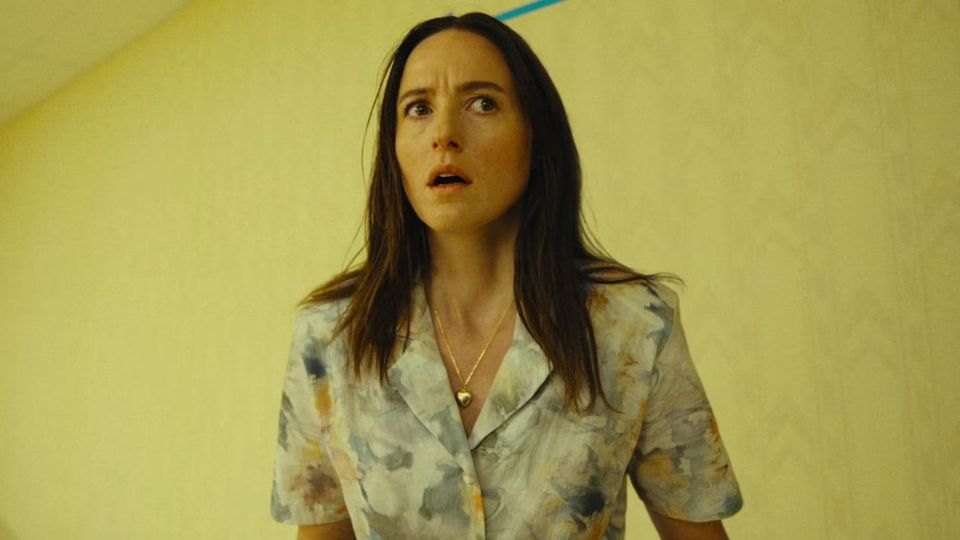
This past weekend, a movie opened with $81M at the box office. A big number. But also one that Hollywood would undoubtedly expect for a marquee film in an early summer slot. But this movie cost just $10M to make. And was directed by a 20-year-old first-time director. Based off of the short films he put out there on YouTube. In that light, this isn't just a big number, it's a holy-shit-your-pants moment for Hollywood.
And while you might be tempted to write off Backrooms as a one-off box office blip a la The Blair Witch Project almost 30 years ago, there are a few reasons to believe this may actually be a sea-change moment for the entire industry.1
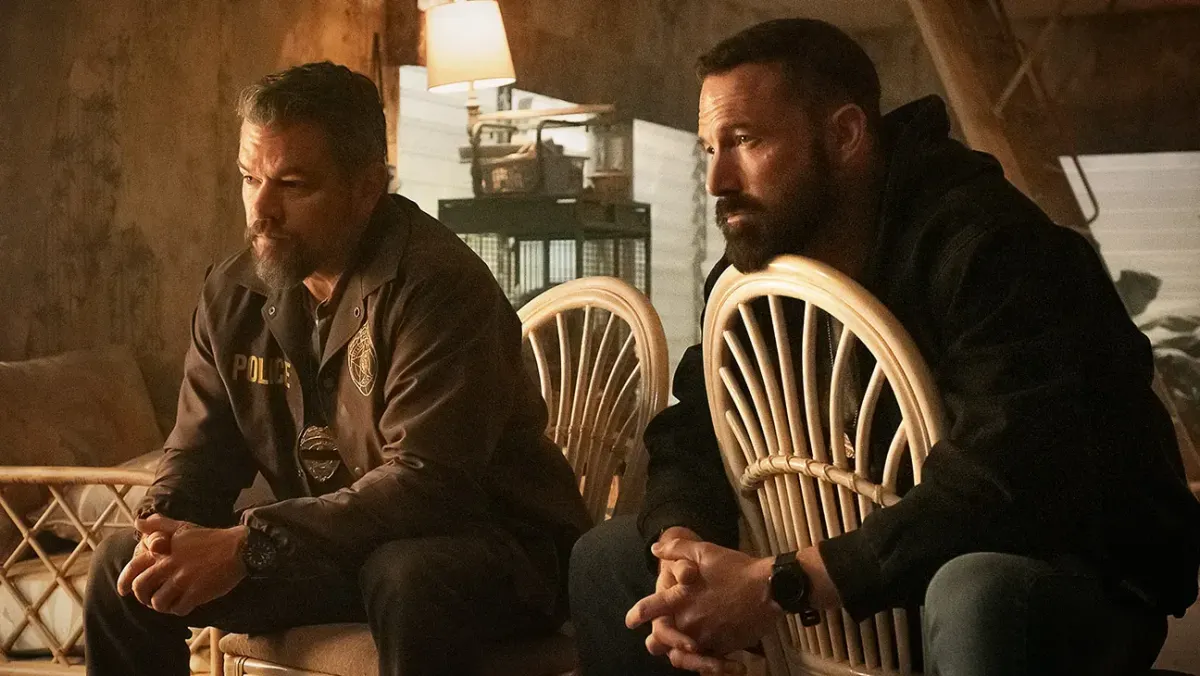
First and foremost, the movie that came in the number two spot wasn't the latest Star Wars epic, The Mandalorian and Grogu, in its second weekend. It was Curry Barker's Obsession in its third weekend. Yes, a movie with a $750k budget by yet another first-time director beat a movie that cost a reported $400M for Disney to make and market.
What is going on out there?
Well, YouTube, for one thing. Beyond Kane Parsons using the platform to perfect his craft and story for Backrooms, Barker also cut his teeth on the service. I wrote a blurb about this in a newsletter last week, but that was when there was some inkling that Backrooms might earn a "mere" $50M this weekend. The $80M+ opening plus the fact that Obsession has now risen at the box office each week – something that hasn't happened (outside of a few Christmas weekends) in 40+ years – all but ensures this movement draws Hollywood's attention much like the Eye of Sauron when Frodo Baggins puts on the Ring of Power.2
And, if history is any guide, the industry may smother this fire before it spreads. Barker is apparently getting eight-figure offers for his next project sight unseen. Parsons may just get a literal blank check after this weekend. Not that they don't deserve the paydays and bigger budgets, but this has always been the delicate balance and not-so-fine line in Hollywood. If something is working, money is thrown at it and everyone sets out to copy it. But this movement could be just as much about the "grassroots" nature of building an audience and fandom on YouTube – and using the platform to stress test your ideas.
And trying to sincerely engage there would be incredibly awkward for a Hollywood apparatus which has spent the past couple of decades first trying to sue such platforms out of existence, and later just generally dismissing the notion of "UGC" as any kind of competitive threat.
This has long been a simmering misunderstanding of the fundamental notion of attention. Hollywood assumed their content commanded it above all else. No one seemed to realize that the relative scarcity of entertainment options leading into the 1950s was not just a factor of their "Golden Age" but was the factor. The box office data over the past 80 years would have very clearly showed this to anyone willing to take an honest look. Per-capita spending first started to plummet, then overall attendance did. Instead, such data was sprinkled with ticket price increases and inflation pixie dust. As a result Box Office "records" continued unabated.
COVID punctured that dream, but rather than wake-up, the industry has been busy trying to figure out ways to go back to sleep.
Anyway, attention continued to shift. To television. To videogames. To smartphones. To streaming. It's not that people are consuming less content – they're consuming far more of it! – but where they're interacting with it has changed. These days, YouTube is king. That misunderstanding is now boiling over in the form of $80M+ opening weekends at the box office.
Which seems like a good thing for Hollywood, right? A legitimate record again, finally. But not one Hollywood controls the narrative around. It will undoubtedly be spun by some as "see, to really succeed, you must 'graduate' to movie theaters" – boy would that be a misreading of what's really going on here.
This weekend portends the end of the "traditional" model for Hollywood. The big studio gatekeepers have been eroding for years, and now it is being swept out to sea. Tidal waves are forming. YouTube is just the first.
Can Hollywood ride such a wave? They will try! But obviously it has to be about more than simply releasing movie trailers to their channels. There will be a rush to try and cultivate talent who are able to leverage the platform natively. But it must be paired with the realization that this is all part of an attention continuum. In 2026, the model cannot only be releasing a big budget movie into thousands of theaters (many of which sit completely empty while the content plays depending on the movie, city, time of day, etc) and keeping it there for a set number of days so as to unnaturally protect a distribution model that was created a hundred years ago.
Again, in a very different world.
That is not to say that movie theaters should die! If anything, this weekend proves their value. They should be utilized in new and interesting ways. Leveraging content that built an audience elsewhere, such as, yes, YouTube. But also television.3 Obviously, that model is nothing new, but what used to be thought of as shows "graduating" into being movies, should be far more fluid. Maybe something starts as a show but builds towards a finale in theaters. Or vice versa. Maybe a movie starts on streaming then builds towards an "event" showing in theaters, a la KPop Demon Hunters – which worked, by the way, because it aired on Netflix first, not in spite of it. Maybe a sequel goes directly to theaters. Maybe a movie opens in theaters for only one week – the horror! – for the super fans, then quickly spreads elsewhere. There are so many different ideas and experiments to try...
Also, they don't really have to be full-on experiments. You can track such things. We can build it, we have the technology.
Speaking of, perhaps the most fascinating meta layer here is that while Hollywood has been busy panicking and bracing for the onslaught of AI, it's YouTube which has come around to truly disrupt the system. This has been a long time coming, of course. But Hollywood was blinded to it because just as with the box office trends, they simply didn't want to see it. They convinced themselves they were looking at easy-to-dismiss "UGC", when they should have been focusing on attention.
In particular, amongst young people. Current tracking suggests that half of the audience for Backrooms was under 25. Half! And 86% may have been below 35. Eighty-six percent! These are not numbers that marketing drove. There's something else going on here, clearly!
Of course, there are smart players that already realized this. A24 is rightfully getting a lot of plaudits for Backrooms opening today. And Focus Features has continued to keep their eye on things like Obsession despite being a part of the OG Universal studio, itself long-since under the Comcast conglomerate. Jason Blum is out there being quoted left and right, which makes sense given the success he's long seen with his Blumhouse banner. The fact that all of this is tied to the horror genre doesn't seem like an accident. It's the one area of filmmaking where smaller budgets are not just tolerated, but are a part of the model. Again, that's not to say you can't do interesting art with big budgets, it just means that the big budget alone is obviously not enough and conversely, smaller budgets may lead to more creativity in the same way that any kind of constraint tends to...
As Brooks Barnes points out in The New York Times, the films of the 1970s that "reset" the industry were in part a response to the big-budget spectacles of the 1960s when Hollywood tried to grow simply by puffing out its chest – with its war chest. It feels like there are similarities here, but also the world is far, far different.
The streamers are at the gate. Hollywood was seemingly proud of themselves having fought off the Netflix "threat", only to wake up to the reality of the Paramount Skydance "synergies". Big Tech increasingly encroaching on this turf is inevitable. Amazon owns James Bond, he will not be the last. We'll see what Google does with news of now two massive movies having effectively started on their platform. Are they okay for YouTube to remain a "farm system" as it were, or do they start to flex? Unlike Hollywood, they do understand the modern attention economy. They've got Netflix and Prime Video and TikTok to fight.
Finally, Hollywood, as with pretty much every industry, seems to be standing on the beach screaming at the ocean as the AI tidal wave approaches. Maybe this YouTube jolt is a wake-up call, but probably not. And I fear that's really because of a broader situation brewing: attention aside, what both the YouTube model and AI may ultimately showcase is the true "democratization" of filmmaking.
For decades, kids have dreamed of growing up to "make it in Hollywood". For almost everyone, it was just that, a dream. Because even if you had the best idea in the world, the odds that someone was going to give you tens of millions – let alone hundreds of millions – to do it was well, impossible. And, as Hollywood well knew, that exclusivity continued to fuel some of the allure. But this weekend may have just showcased those gates shifting. And AI may throw them open for good. Because in order to make a movie, you'll no longer have to make it in Hollywood. Quite literally, you won't!
One more thing: one of the production units that co-produced Backrooms was 21 Laps. That's the group set up by filmmaker Shawn Levy – whose next film is next summer's next Star Wars: Starfighter.
 M.G. Siegler
 M.G. Siegler
 M.G. Siegler
 M.G. Siegler
 M.G. Siegler
1 I was tempted to call it a 'DeepSeek Moment' but well, that moment ended up being complicated – less 'Sputnik' more 'Spendthrift'. In that way, this may be sort of similar! ↩
2 For context, The Mandalorian and Grogu fell nearly 70% in its second weekend. Yes, big drops are normal for blockbusters, but 70% is a very big drop. ↩
3 Yes, this is sort of ironic given that The Mandalorian started by streaming on Disney+ and they clearly thought that would give it more legs in theaters. But Star Wars is a whole other can of worms, dating in part to its long history, starting as a lower-budget genre-defining project by a renegade filmmaker in Northern California... ↩