
OpenAI is Busy Both Bundling and Unbundling
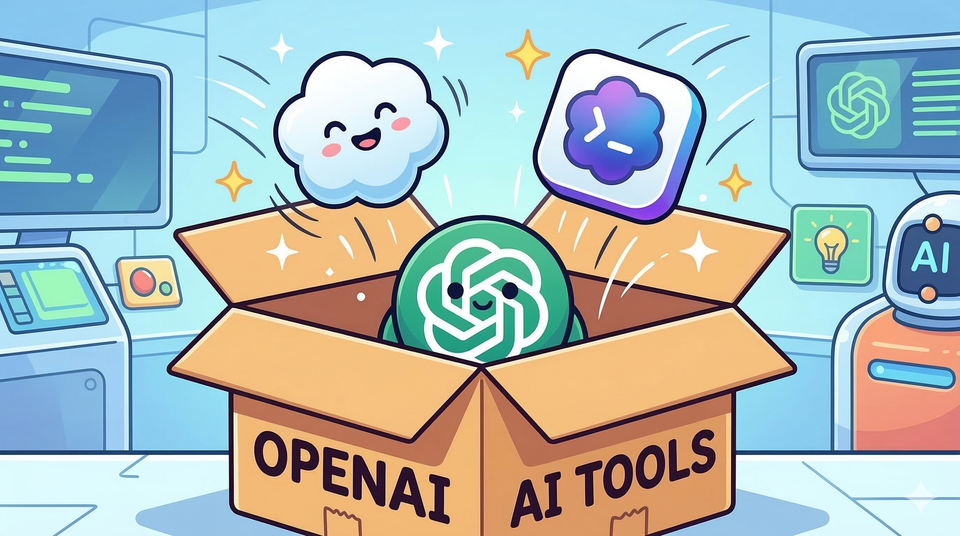
It used to be the case that just about the hardest thing in the world was to get someone to download a new app. But in 2026, given the connection speeds we all enjoy, the actual downloading process is negligible. The hardest thing now is getting them to actually use the app. Such is the story with Sora.
As Stephanie Palazzolo and Sri Muppidi of The Information report:
OpenAI plans to soon launch its Sora AI-generated video capabilities in ChatGPT, according to people with knowledge of the effort. The strategy shift could increase the chatbot’s usage as well as its costs.
The move comes about five months after OpenAI released a Sora mobile app, which lets people quickly create videos of themselves and other people or animals doing mesmerizing or humorous acts. The app’s look and feel mimics the style of TikTok but doesn’t appear to have gained wide appeal.
Well, it did gain wide appeal, reaching the top overall position in the App Store and lingering in the top 10 for quite some time. The problem was staying there. And that's in no small part because the millions who originally downloaded the app largely stopped using it. At least regularly. I should know, I'm one of those users.
To be clear, when I do find myself opening the app every once in a while, I still get sucked in. There is a lot of content that ranges from amusing to hysterical – and from creative to copyrighted – but there's also less of it now, at least from people I know.1 And unlike TikTok, it was set up with some core social components in mind, notably through "cameos" (the problematic feature name due to its own trademark issues!). And whereas Sam Altman himself humorously filled any social voids in the early days of the product, now it feels more like nth-tier celebrities trying to latch on to an early movement.
Again, the movement has largely stopped, at least in that the app is no longer "breaking out" as it once was, and as such, doesn't have much of a shot at another mainstream moment. At least not naturally. If and when Disney content gets added into the mix, there will likely be another viral swarm back to the app. But unless OpenAI can keep that up at a regular cadence, they're probably going to need another answer here.
And that answer is clearly to bundle it back into ChatGPT itself.
Yes, yes, we're right back to the "bundle and unbundle" quote that I turn to so often. But here, the unique dynamic with OpenAI is that they're constantly bundling and unbundling at the same time. And I think it's probably the right strategy, because it's still the early days of AI and no one is quite sure what will work and what will not. Success is often stumbled into, from ChatGPT on down.
That's the thing, without question, ChatGPT is that mainstream hit. As it nears a billion active users, the service has become synonymous with AI itself. If you asked my older daughter about AI, it would be the first thing she mentions. I asked her about Gemini and Claude the other day, she didn't know what those were. But she's now constantly asking me to "ask ChatGPT" something (as she's too young to have access on her own). Despite the comically clunky name, it has become the "Kleenex" of the industry, at least for now. And that's brand value that money cannot buy.
So of course, as a company, you want to leverage that. I still think it was the right call to launch Sora as a stand-alone app to start. And I think the early viral success bears that out. But that also doesn't mean you can't pivot if and when that virality flames out.
If it's the case that the real value of Sora is less a TikTok-style feed and more about sharing amongst smaller social circles, you obviously want to tweak the app to ease that, as OpenAI has. But what if it's actually more about creation itself? At that point, you might pivot again to move it back within ChatGPT.
As the article notes, this may also be an attempt by OpenAI to boost ChatGPT above that elusive 1B WAU mark. But that doesn't mean it's the wrong thing to do and try. Especially as ChatGPT itself continues to morph from a simple chat interface into something more robust.
At the same time, my sense is that the group-chat element of ChatGPT itself isn't really working in a major way. That may be based on my own anecdata, but the fact that OpenAI isn't touting it constantly seemingly suggests it's not some huge hit – in the way that say, early Sora was.2 The answer here may be the opposite: to give the group chat feature its own app/service. That alone won't be enough, of course – again, it's hard to get people to download let alone use new apps – but OpenAI is great at coming up with these little product moments to spur usage. They could and perhaps should try that with group chats. Because I do think there's something that could end up important there. I mean, "chat" is right there in the name!
And you know what could pair well with Group ChatGPT? Sora.
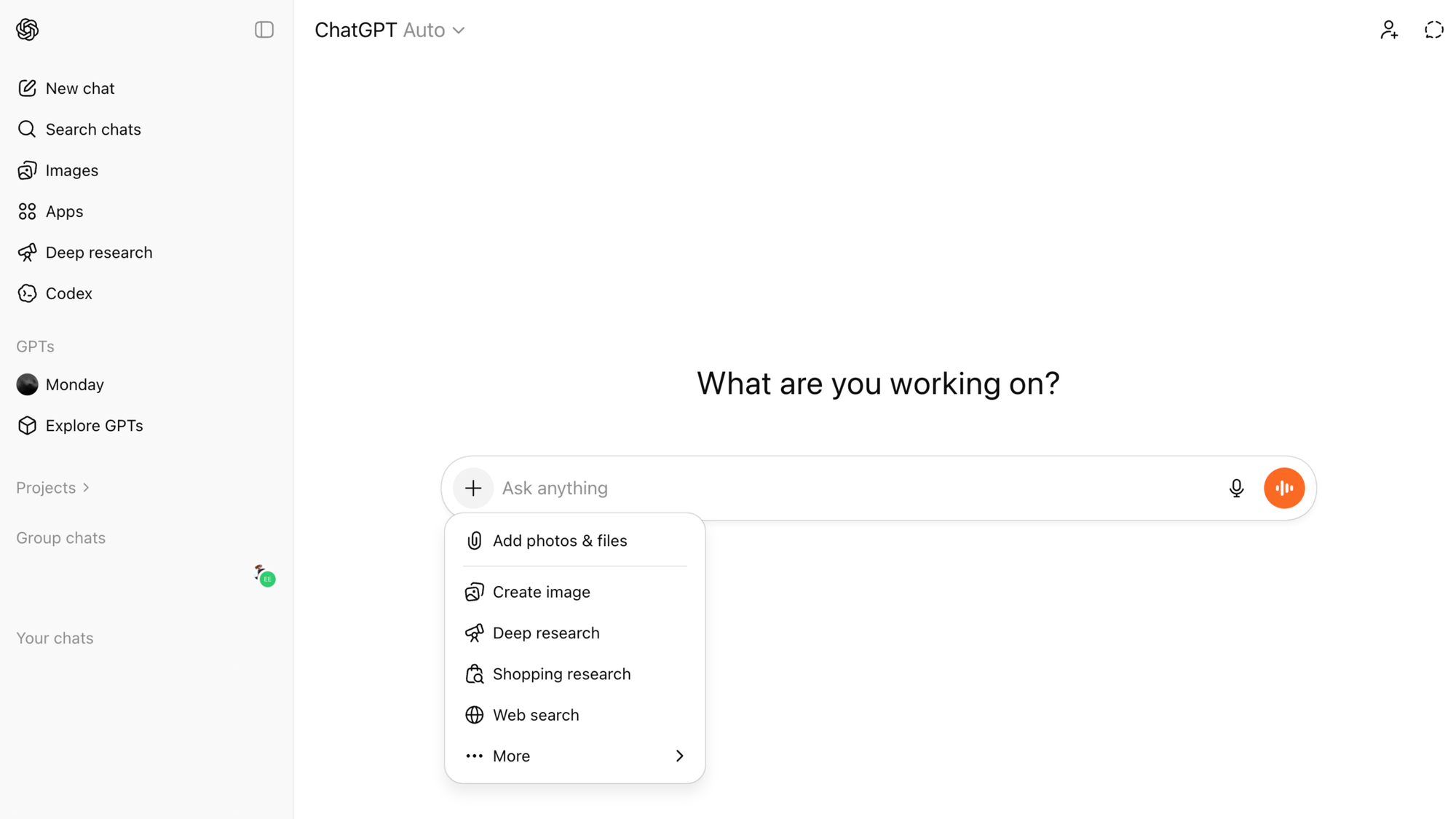
Meanwhile, all eyes and hands internally would appear to be on Codex at the moment, as OpenAI tries to combat the rise of Claude Code (and Cursor, etc). Maxwell Zeff has a big story about that effort that just hit in Wired. It's a good read about how OpenAI missed the initial opportunity and what they're doing now to try to correct that. One of the big high-level takeaways would seem to be that many inside the company assumed that coding would just be a part of ChatGPT, and not necessarily its own product.
And that may or may not have been colored by the fact that Microsoft was so heavily using their models for coding within GitHub. Since their (at the time) core partner (and benefactor!) was tackling that use-case head-on, OpenAI focused on the myriad other things they wanted to work on. And by the time they recognized the mistake, and tried to buy Windsurf (after Cursor turned down their overtures), Microsoft stepped in to scuttle that opportunity. Ouch.
Anyway, now there's Codex, which is right there, front-and-center in ChatGPT's sidebar. But clicking it takes you to yes, another app.
At the same time, OpenAI is hustling to sell Codex into enterprises. And, unsurprisingly, they're using their own strength to make inroads:
Several major enterprises have signed on to use Codex too. “The fact that ChatGPT is synonymous with AI gives us a massive advantage in the B2B market,” says Fidji Simo, OpenAI’s CEO of applications. “Companies want to use technologies their workers are already familiar with.” OpenAI’s strategy to sell Codex is largely based on packaging it in with ChatGPT and other OpenAI products, Simo said.
Ah yes, the old bundling playbook! Deemed illegal at times for companies like Microsoft because it's so effective! Next up? The government!
Another product that's rather oddly unbundled at the moment? Translation. You'd think that would be an easy one to include in the ChatGPT bundle, but OpenAI is clearly using it as lead gen. As a wedge to expose new customers to the magic of AI.
Health could be next. Simo has already talked about the high-level strategy here of making it a part of ChatGPT to start (in its own area). But don't be surprised if they try it as its own service/app at some point. Obviously, it will depend on how it works within the broader app and what features resonate with users.
Don't forget apps! As in third-party services that are bundled to run within ChatGPT. OpenAI tried an 'app store' approach before for GPTs that didn't really work. And this doesn't seem to be working so well either, thus far.
All of this points to the obvious downside of bundling everything within one app – it gets crowded, and thus confusing, fast! OpenAI has already shown some Microsoftian tendencies with their model drop-down menus – since alleviated, thankfully – and cramming a ton of features into a Frankenstein's Monster-like product experience is obviously the fear here. At the same time, you have the most downloaded and most used AI app in the world. You should use that to your advantage, right? (Especially when you're trying to launch ads within that app...)
Again, I think the answer and strategy here has to be trying a bunch of different things. Sora as a stand-alone app, Sora within ChatGPT. Codex as its own app, Codex more tightly integrated. Group Chats within ChatGPT, Group Chats perhaps outside. Etc.
And this experimentation will necessarily need to expand as OpenAI breaks into actual hardware. They've tweaked voice mode within ChatGPT a few times, but when it's the main method of interaction with any newfangled device, how does that change the product and UI of ChatGPT itself?
Update March 25, 2026: Well, so much for that. So much for Sora!
 M.G. Siegler
 M.G. Siegler
 M.G. Siegler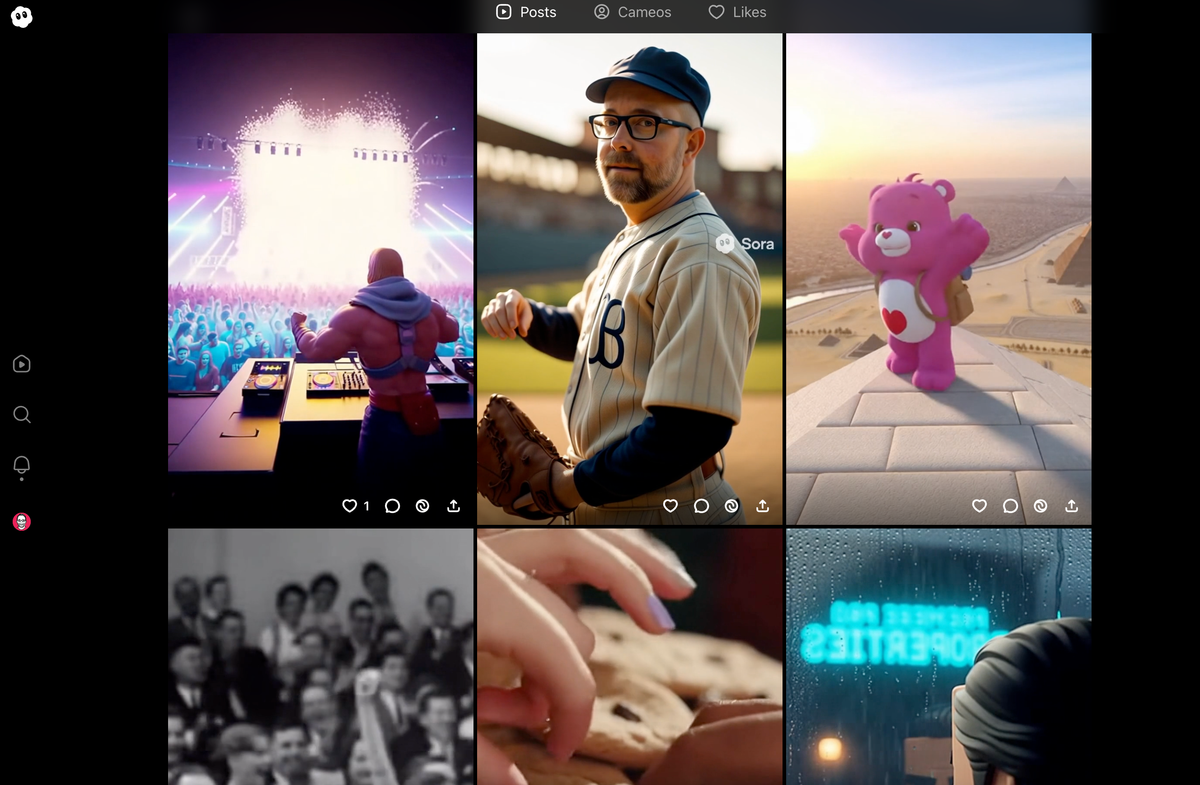
 M.G. Siegler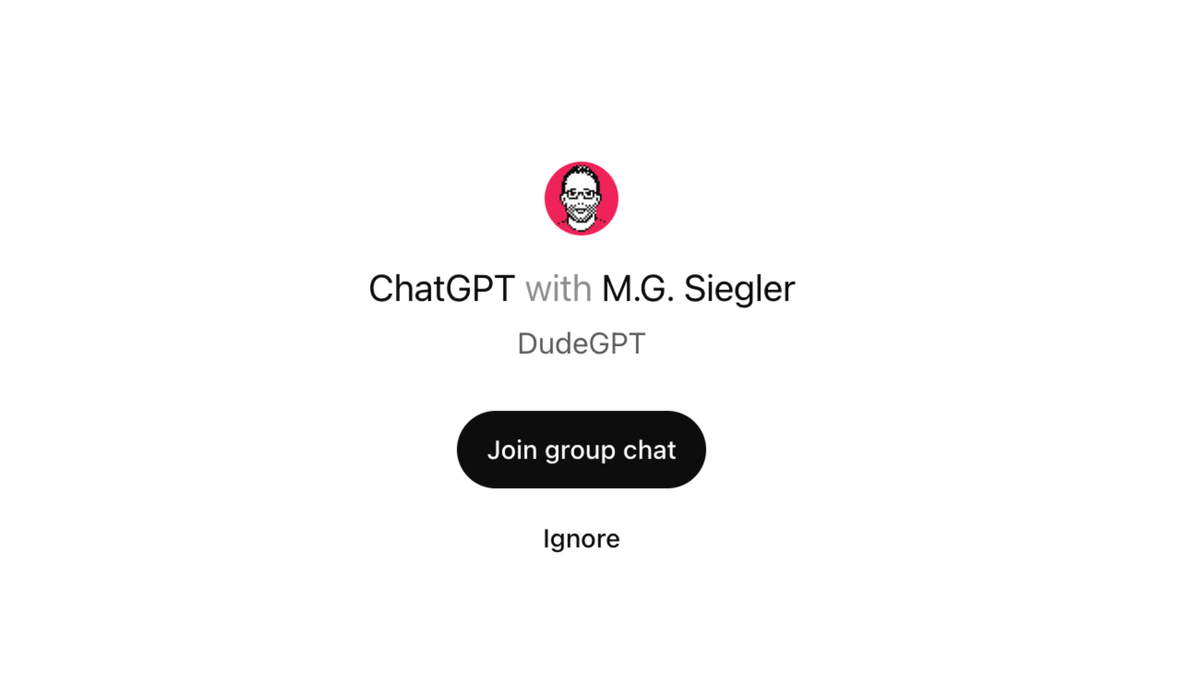
 M.G. Siegler
 M.G. Siegler
1 I might also note that it's still only available in a handful of countries – one is not even the UK yet... ↩
2 Ditto with Atlas, the web browser launched to much fanfare. They've been awfully quiet about it of late... ↩