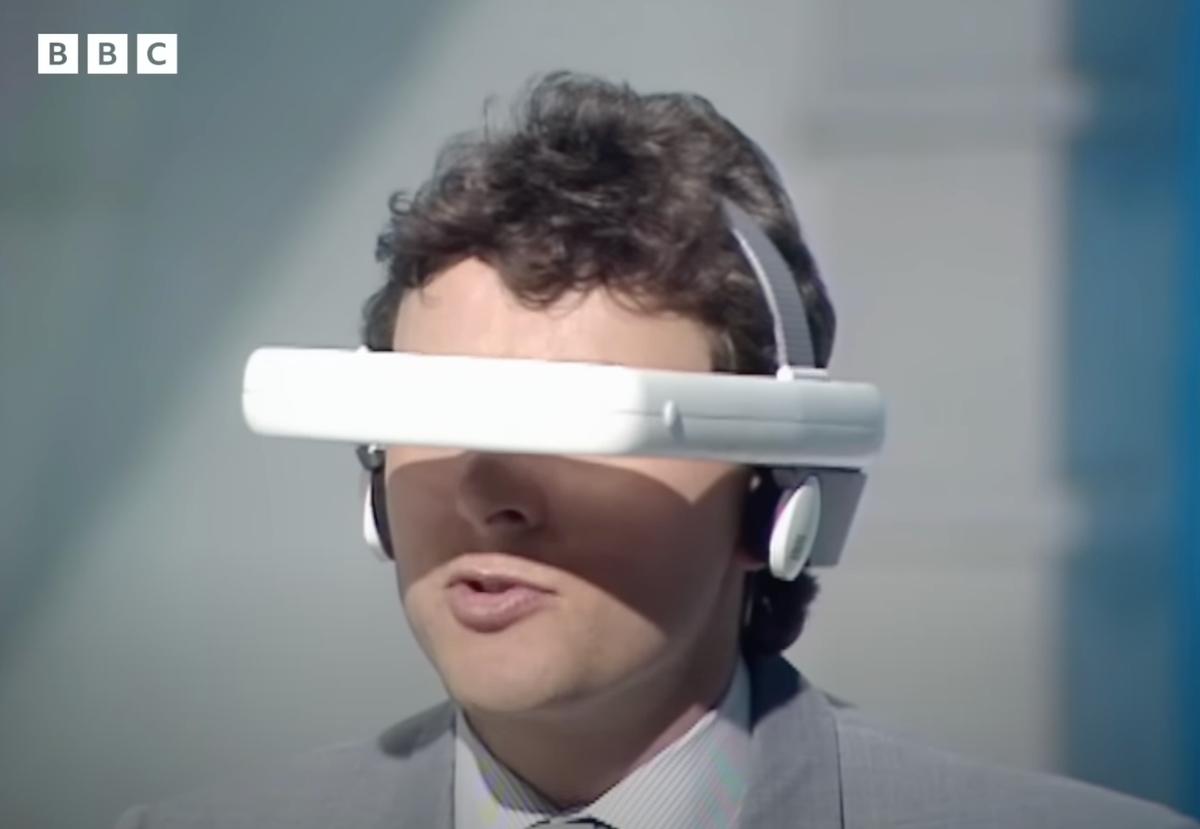
The 70 Year Old iPhone
 Steven Levy
Smart angle by my friend Steven Levy to not ask Apple about the past on the verge of their 50th anniversary – which Levy was right in the center of covering for nearly the entire run, of course – but about the future. And fitting that Apple dispatched John Ternus – he who would be king – rather than Tim Cook to talk (though Levy also managed to get a comment from Cook at an event, and Apple's longest serving executive, Greg Joswiak – 40 years! – was there too).
When Levy brought up the notion of Apple being behind in AI:
These gentlemen disagree. Apple, they insist, is already at the forefront of the AI revolution. “We were doing AI before we called it AI!” says Joswiak. “Every single great chatbot works great on our products.” Ternus argues that even if Apple didn't take the lead in developing AI technology, it would still benefit. “Our products are the best place people will use the existing AI tools.”
It's not quite as gaslight-y as the interview that Joswiak and Craig Federighi gave after last year's WWDC when asked about the clear downplaying of AI at the event (after touting it the year before and well, you know...), but I just wish they would frame this decidedly less defensively. Something like... "look, we view it as still the very early days of AI, and while we've been working on it for a while, and there have been some fits and starts, no one yet knows exactly how it's going to play out, so we're trying to take a pragmatic approach in our build out and ensure that our devices and platforms are the best place on which to build for that future."
Ternus is much closer in that regard, which is great to see, if he is indeed the next CEO of Apple. After Levy pushes back on their answers, wondering how they can ensure that Apple is the company making the devices of the future if they're not building the cutting edge of AI themselves:
“I would assume you want one of them to be an Apple device, right?” I asked.
The answer seemed to be not necessarily. “Let’s not lose sight of the fact that nothing you just said is incompatible with the iPhone,” Joswiak says. “The iPhone is not going to go away. iPhone is going to serve a very central role in any of those things you’re talking about.”
In the short term, no doubt. Even in the medium term, sure. But Levy reminds him of the framing he's asking about:
Wait—Apple thinks that people will be using the iPhone 50 years from now?
“It's hard to imagine not,” says Joswiak. “That's where everybody else struggles. They don't have an iPhone, and so they’re scrambling for what to do. A lot of what they talk about ends up being accessories for an iPhone. We’re not going to get into future road maps, but I will tell you, iPhones are not going anywhere.” (Despite this bravado, I will be shocked if Apple does not come out with some AI-powered gadget in the coming years.)
50 years from now will be 2076. While it some ways it does feel like technological breakthroughs are happening slower than 50 years ago on the consumer tech end, in other ways, things are moving far faster – including, of course, AI!
Beyond Apple's founding, 1976 was about color TVs, early video games, and microwaves. Big, chunky tech starting in the home that would be refined and miniaturized as things moved digital. It's probably reasonable to think we'll have something akin to an iPhone 50 years from now, but the form factor will be far different. Perhaps something you wear, or a tiny piece of tech that still lives in your pocket, but unfolds into (or syncs with) something more robust depending on the use case. Will that still be an 'iPhone'? That's harder to see. It would be wild if the same branding exists by then – the concept of a "phone" is already a bit silly. But again, some sort of main computing hub still may be around...
That could, of course, be our robots back in our homes running computing workflows agenticly for us and pinging us as needed...
Later in the day I have my greeting with Cook, and immediately ask him about Apple’s next 50 years. He launches into a rhapsodic description of Apple’s people, values, and culture, predicting that no matter what twists lie ahead, those factors will continue to make Apple unique and super successful. “Yes, the technologies of the future will change,” Cook says. “Yes, there will be more products and more categories. All of those things are true, but the things that made Apple. Apple will be the same for the next 50 years, and the next 100 and the next 1,000.”
It's a nice sentiment, but a bit silly. While companies like Nokia, Siemens, and GE are all over 100 years old, they all started life quite differently, of course – Nokia famously as a paper mill! More "pure" tech still around today is probably IBM, which is 125 years old. Given that tech is now central to pretty much everything in modern life, it's certainly reasonable to think some of the current companies will be around in 100 years – 2126 – but undoubtedly most will not. That's just the reality of business. Things go boom and bust – or they get merged out of existence.
A thousand years? 3026. I would make a joke about hoping the world exists by then, but that's too morbid and depressing. So instead I'll make a joke about hoping that Apple has fixed Siri by then to run well on the iPhone 1018 Pro.
 M.G. Siegler
 M.G. Siegler
 M.G. Siegler