
The Market Shifts Apple
Just how big of a deal are these price increases for Apple? Well, just look at their strategy for announcing them.
While Tim Cook and team have been hinting for months that the unprecedented situation with memory chip demand was likely to impact their margins, as time went on and it was clear the situation was not resolving itself, those whispers started to shift towards actual price increases. While others had taken such action already, others don't operate like Apple, where the pricing simplicity and consistency has long been a point of pride. While prices have evolved over time, if anything, Apple's products are now cheaper, relatively speaking, than they've ever been.
This is sort of a "narrative violation" when it comes to Apple – long seen to many as the sort of unnecessarily expensive option with big margins. But often left unsaid about Apple's margins is that just as big of a factor in them being nice and fat was the command Apple had over their manufacturing capabilities and the sway over their component suppliers. Even as inflation ravaged economies around the world, Apple was able to hold prices fairly firm.
But this situation is clearly quite different. Last week, Apple had obviously seen enough to know it wasn't going to ease any time soon.1 Tim Cook gave an interview to Rolfe Winkler at The Wall Street Journal to tell the market that price increases were coming. There was a question as to just how soon – could Apple hold out until the iPhone 18 event in September, a more "natural" time to shift prices? The answer, of course, was "no." A week after that interview, the increases are here.
But even this execution is interesting in that Apple actually didn't increase the all-important iPhone prices. Yet. And that last bit is the key, as such increases for Apple's top-selling device are clearly coming as well. But Apple didn't want to shock the system all at once. Today's increases, in a way, are also a path to guide towards the inevitable iPhone price increases coming in September – assuming Apple can hold out that long!
Wall Street doesn't seem to be appreciating the nuance here, with Apple's stock currently dropping around 5% in trading – pushing it back below Google and risking falling below the $4T market cap mark. But Apple is clearly worried about the bigger picture here.
The iPhone isn't just a part of their product lineup, it's the device that dominates it, both in terms of volume and revenue. While Services has been slowly chipping away at the lead, the iPhone is still the product that consistently brings in over half of Apple's revenue each quarter. Even with all the product diversification over the years, it's still very much as goes the iPhone, so goes Apple.
And so if and when Apple has to raise the price of that device, it's going to have an impact on the business, obviously. And sadly for Apple, it's unlikely to be the Veblen variety – where higher prices lead to more sales. Instead, higher prices are going to lead people to push out would-be purchases. And that is going to hurt Apple's quarterly earnings, obviously.
So the move to increase prices nearly across the board today – from the HomePod to the MacBook Pro to even the sad selling Vision Pro – is yet another signal of what's to come. That way, when John Ternus takes the stage in early September – in his first event as Apple's CEO – when he announces the iPhone 18 models with a new, higher starting price, the market is fully braced for it. Apple will have guided towards the change, twice.
In a way, it's probably a good thing that Apple is said to be splitting the iPhones 18 unveiling into two timetables going forward. The 'Pro' models are set to be unveiled this Fall, with the 'regular' models due in the Spring. Given Apple's clear reluctance to raise prices, they probably didn't make this change on purpose, but it could end up a bit lucky because the would-be 'Pro' buyers are naturally going to be less price-sensitive than the 'regular' model buyers. And by the time those devices come next Spring, they'll effectively have had three warnings of pricing changes.
That's not going to make the new iPhone Ultra/Fold price any easier to swallow – could the thought-to-be $1,999 starting price now look more like $2,499?! – but it's something.
Another interesting wrinkle to watch for here: if this price change telegraphing actually pulls forward iPhone sales this quarter leading up to the new iPhone launch. Another way to look at what Apple is saying in not raising the iPhone price now is: get your orders in now if you want to lock in the current price. Normally, this would be the worst time to buy the current generation of iPhone models, with new ones so close, but now it might actually be the best time – especially if you're in the market for the 'regular' models or the iPhone Air, again, both of which are not expected until the Spring. This could lead to a weird situation where Apple's numbers actually jump this quarter to get ahead of the price changes.
Regardless, this is an unprecedented time for Apple – certainly the modern Apple. Yes, that's true for many companies given the chip shortages, but as the most important consumer device company, it's especially true for Apple. And it's yet another sign of the shifting landscape in which they operate.
For years, Apple has been able to dominate and dictate to their suppliers thanks to their scale. But the Asian operations which Tim Cook so famously set up, have been upended, like most everything else, by AI. From TSMC on down, Apple is no longer the customer dictating terms for the entire industry, it's now the company which has taken over the mantle as the most valuable one in the world: NVIDIA.
And so it leads to situations like this one as relayed by Winkler in his story on the price hikes today for The Wall Street Journal:
In an interview Wednesday night, Micron Chief Business Officer Sumit Sadana said the company couldn’t make investments during the memory market’s last downturn, when Micron’s gross profits went negative, in part because certain customers took advantage to pay rock-bottom prices.
“We told a couple of the customers who were being very aggressive with pricing at that time that this is not constructive,” he said, without naming Apple, adding that low prices discouraged capital investments. “A lot of the industry investments got shut down in 2023 because of really poor pricing and really poor margins.”
Again, he didn't explicitly call out Apple there, but come on. Apple is widely known to be a major Micron customer. And the company was obviously taking advantage of the last contracts they negotiated to hold prices steady as market prices surged. Micron clearly didn't like that situation too much! But whereas previously they may have had to grin and bear it given Apple's position and importance in the industry, there's a new world order now, in terms of who orders for the world.
Perhaps Apple would have been better positioned had they taken the AI wave more seriously to start. But again, they're hardly alone here. The only companies in great positions here right now are the memory chip makers. If the "Tim Cook Doctrine" had guided them in that direction, Apple would certainly be a $5T company now. But that's easy to say in hindsight – then again, Samsung is right there!
And NVIDIA is right there, first in line, not Apple.
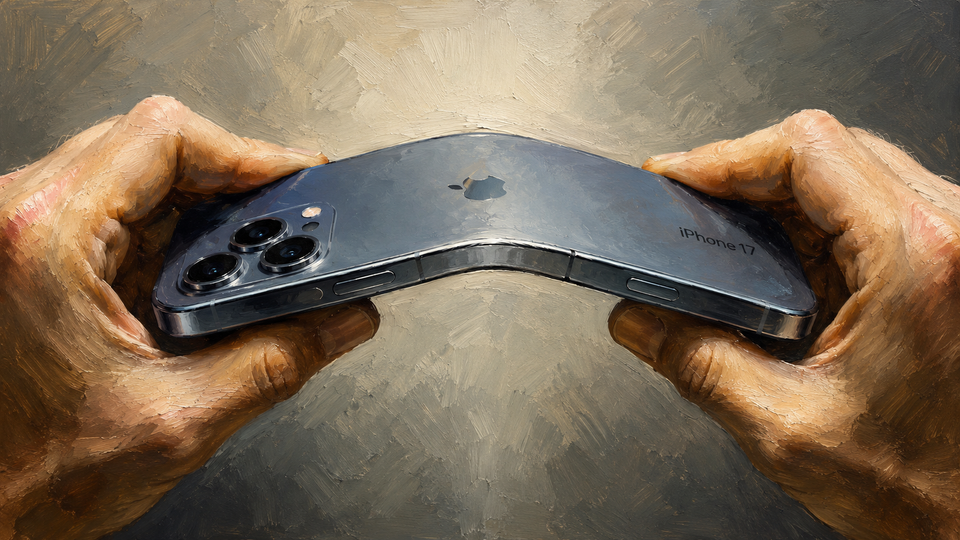
Apple is used to shifting markets. To bending others to their will. Now Apple is the one being bent. Being forced to shift strategy. It must be uncomfortable.
1 And the worst news on that front is buried in today's WSJ piece: Micron now thinks the pressure on memory chip supply will last throughout not just 2026, but all of 2027 too... ↩