
Your AI Margin is Meta's Opportunity
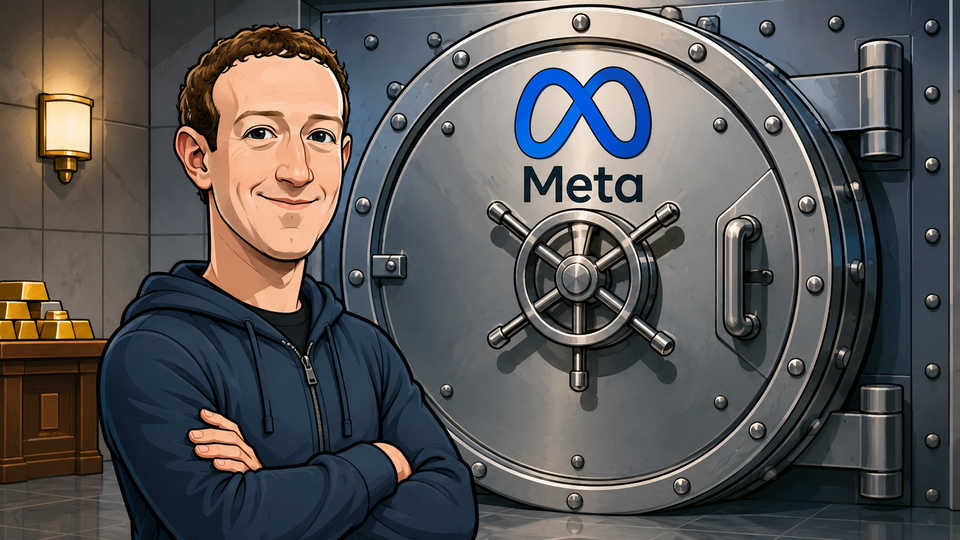
Happy Muse Spark 1.1 Day to those who celebrate. Which clearly includes Mark Zuckerberg, who is seemingly so giddy about the latest work out of his Superintelligence Lab that he's even tweeting for the first time in years. And just as with the first 'Muse Spark' – still a silly name – model, the early results sound promising. Still not full-on frontier, but inching closer in certain regards like image generation and perhaps coding and some other agentic workflows.1
Anyway, with "Watermelon" – their true frontier model shot – seemingly still growing on the vine, performance isn't really the key today. I mean, a certain level of performance remains table stakes, but there are two other areas to focus on in today's announcement: charging for the API and the price they're charging.
Zuckerberg sat down with Kurt Wagner for Bloomberg to talk about it:
“Since this is not an open source model, this is I think the first time that we’re doing a real serious API,” Zuckerberg said, referring to the application programming interface used to access Meta’s AI. “And the pricing is going to be very aggressive and attractive.”
We've been over Meta's shift from open source – many times – so I won't belabor it, but it is wild just how casually Zuck has shoved it aside given his rhetoric over the past few years. But hey, good leaders know when they need to change direction, even if it's a 180 and makes previous statements seem a bit silly. Far more interesting is the fact that they're charging for the API and again, the pricing.
To the first point, despite endless efforts to diversify their business over many years, Meta's revenue remains completely dominated by advertising. To the tune of something like 98%. As I've noted before, it's a great problem to have – but it's still a problem. And you can tell Meta knows this not only by all the efforts over the years to branch outside ads, but just the efforts in recent weeks to move to sell premium subscriptions (many of which are tied directly to AI usage) and the rumored (but obvious) move to launch a Cloud offering.
This API would be a part of that Cloud offering, so consider it a first step. And it's an important one because Meta is obviously coming very late to this game. So how do you enter such a crowded field? Price:
Meta will also introduce a new Meta Model API system, which will be used to collect fees from developers. Its API pricing is roughly 25% of the cost advertised by other top models from OpenAI and Anthropic PBC. Developers will be able to use Meta’s model for free, but only up to a point; they’ll be required to pay for access after reaching a certain token threshold, Zuckerberg said.
“The pricing from some of the other labs is very extreme and has very high margins,” Zuckerberg said, underscoring that his strategy is to get Meta’s technology in front of as many people as possible. “We think that there’s a real ability to be able to offer frontier or very high-level intelligence at a much more affordable cost.”
Yes, this is Zuck's "your margin is my opportunity" moment, echoing the old famous Jeff Bezos quote.
Now, I assume the AI rivals would all say that they're not being overly aggressive on margin and that the cost is simply what they think can get them to some level of sustainability. Of course, while Anthropic may or may not be close to such a level, OpenAI famously is not. That's why they're raising $122B venture rounds. Mind-boggling numbers which, by the way, still won't be enough to take them to that sustainable level without some major tweaks to their model and/or spend. And Meta just made that a lot harder today.
In a way, it's more like "your lack of an underlying business to support your AI build out is my opportunity". Because, yes, Meta's ads cash machine allows them to execute such a strategy. OpenAI also supposedly wants to drastically cut prices to eat up market share, but again, how are they going to pay for that?
At the same time, Wall Street would also like to know how Meta is going to pay for this. Because as great as the ads business is, at the end of the day, the amount being spent on the AI build out is going to eat into their profits and then some. That's undoubtedly part of the reason why Zuck is throwing them the 'Meta Cloud' bone.
Also, it helps to have full founder control and voting shares and you can more or less tell Wall Street to Zuck off.
But actually, Zuck is also making the case in this interview for why he feels like Meta had to (re)build their own frontier models:
“If you really want to build the best experiences for people, you have to be able to shape the underlying technology,” the Meta CEO said. Controlling the technology is going to let Meta “deliver exactly what we think is going to be the best experience.”
Fair enough, though Apple would argue they're building the exact best experience they want by paying Google to distill their models. So couldn't Meta just have done that or something similar?
Zuckerberg is not convinced that the technology will ultimately become a commodity — that is, that all of the various AI models will essentially do the same thing and be more or less indiscernible from one another. He pointed to Mythos, the latest model from Anthropic, which raised national security concerns in the US, as an example of how companies are already gatekeeping aspects of the technology instead of sharing it widely.
“The capabilities are not actually getting diffused or made broadly available to everyone,” Zuckerberg said. “Anthropic is sort of keeping a model for themselves and releasing a kind of simpler version of a model. And there are all these reasons for why they may or may not be doing it. But that at least does not suggest to me that the world is either heading in, or is guaranteed to head in, a direction where this ends up being something that is widely available.”
In other words, if they relied too much upon someone else's models, Zuck knew they would run into the situation where those models could go away for any number of reasons. While perhaps no one thought it would be the US government who would pull them back, the point stands. Zuck has years of scar tissue from being beholden to Apple (and to a lesser extent, Google) in mobile. He wasn't about to let someone do it to Meta in AI. Costs be damned!
Wall Street should probably appreciate that. But won't. But they will appreciate charging for the API – even if it means undercutting prices – because of what it signals: the potential for a more diversified Meta and one that may yet figure out how to pay for that AI build-out...
One more thing: Of all the juicy Zuck quotes, this must be the most succulent:
“That is a pretty interesting milestone because I think this may be the first time, at least that I can remember, that Meta’s models are better than all of the Google models,” he said.
Ouch! You think this is being passed around Mountain View today?

 M.G. Siegler
 M.G. Siegler
 M.G. Siegler
1 That's assuming we can trust the numbers that Meta is putting out there which, after the Llama 4 debacle, we should probably still wait for these to be verified by others. ↩