Dreams of a Siri That Doesn't Suck
Golfers will know the term "mulligan". While the origins are murky, it undoubtedly came from someone with that last name taking a bad shot and requesting a "do over". It's not an officially sanctioned rule, of course. But even the best golfers in the world use a mulligan at some point. Now, one of the best companies in the world is about to use one.
Apple.
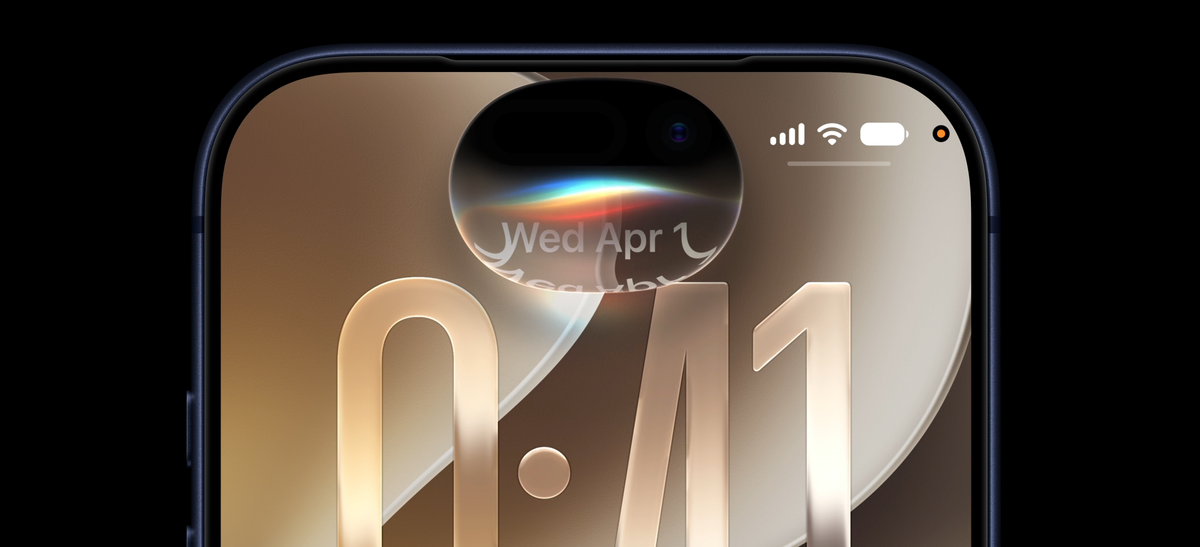
Later today at WWDC, Apple will unveil the new Siri – for real this time. Two years ago, the company laid out a vision for 'Apple Intelligence', which sounded good on paper and in presentation. A sort of "AI for the rest of us" – products not fully built around AI, but products you already use augmented with AI to make them smarter. While they were suspiciously light on demos, Apple Intelligence would be coming soon, mostly in the Fall with the usual OS updates, Apple promised.
Given the history of Siri up until that point – bad to the point of becoming Larry David punchlines – we had no real reason to believe Apple would get it right this time. But hey, it was the dawn of the Age of AI. And it was Apple. There's no way they would deceive us with vaporware, right? Right?!
What happened next was a shitting of the bed not seen since the Apple Maps debacle in Tim Cook's early days as CEO. And actually this would prove to be far worse. Because at least Apple could make a compelling business (and subsequently, privacy) case for why they needed to rip out Google Maps and roll their own. With AI, Apple was just in over their heads, but they couldn't see it. Worse, they thought everyone else was wrong. That chatbots were a silly toy. That LLMs would be a passing fad. Again, wrong.
Heads rolled, though clearly not as fast as they should have. WWDC 2025 came and went with Apple hoping that new UI would distract from AI. It didn't matter that 'Liquid Glass' was divisive, what mattered was that everyone was talking about it rather than talking about Apple's AI failures. When those were brought up, Apple was ready with some epic gaslighting. "As you know, Apple Intelligence is great..."
Behind the scenes, everything was not great, of course. Beyond making the wrong early calls and bets with AI, the problems were exacerbated by the nature of the technology itself. It was continuing to evolve so fast that even if Apple could ship their answer, it was likely going to be out-of-date by the time it did – we saw this with the few features that did actually launch. They were a day late and about a billion dollars short.
Many more elements just never shipped. And the constant delays even started spilling over into Apple's bread-and-butter: their tangible products which sat somewhere, probably in Asia, ready to be assembled but lacking the smarts needed to make them sing. So those too were delayed.
Apple faced the same problem that Amazon did in that they had a massive install base already using the old version of their "AI" – the Siri and Alexa voice assistants – for rudimentary tasks such as setting timers, checking the weather, and playing music. They perhaps thought they could just swap in the new tech to replace the old tech, but when they tried to do that, things started breaking at the edges.
Even Google was running into such issues, which is why it has taken so long to replace all the functionality of their 'Assistant' with Gemini.
But whereas Amazon and Google were deep in the weeds of AI, Apple was not. So it was a bit like trying to change an engine mid-flight not with a toolkit, but with a tuna fish sandwich.
I had a sense of what Apple probably needed to do about 18 months ago: replace Siri with an AI service that actually worked. Not just as a fallback, a role ChatGPT has obtusely served, but as the main brain of Siri. Sure, easier said than done, but well, it's eventually exactly what Apple would do.
Well, not exactly, as it sounds like Apple is technically "distilling" Google's Gemini models into a modified version for their own purposes. Still, this is obviously what Apple should have done from the get-go. Hindsight is 20/20 and all that, but it's also the playbook Apple often follows – with Google Maps, for example!
Outsource that shit until your version is ready to roll!
There was undoubtedly a mixture of arrogance and simply bad decisions at play here. But I also worry this aforementioned Age of AI requires a method of execution that Apple is simply not geared towards. Constant, rapid iteration and deployment. Not going under the shroud of secrecy for a year, emerging with a perfectly polished gem to showcase to the world. I think even Google is making this mistake to some extent as the most recent Google I/O showcased.
The difference is that Google, thanks to DeepMind, is an AI powerhouse. Apple probably should have acquired their own DeepMind, but now it's undoubtedly too late and certainly too expensive. So instead they're paying Google to use their DeepMind. Awkward. But the correct call.
And it's why I'm actually optimistic heading into this WWDC keynote. Again, I've remained skeptical of Apple's abilities to pull off AI over the past couple of years because I've been writing about Siri since before they launched it 15 years ago. Every year they say it's going to be the year that Siri gets good. And every year Siri continues to suck.
That's obviously a bit unfair. (But not fully!) Siri has been useful for certain things, like the aforementioned setting of timers and other such rudimentary tasks. But whereas Alexa quickly ate Siri's lunch as a toddler, now ChatGPT, Claude, Gemini and all the rest are full-on bullying Siri, Mean Girls-style, as a teenager. Can Siri join the cool kids table while also staying true to her roots?
Meaning, of course, Apple's roots in privacy and user experience.
Thanks to the Gemini-infused lobotomy, I'm cautiously optimistic. I also think Apple finds itself in an interesting place thanks to the fact that the product which has long been viewed as the leader in AI, ChatGPT, is in the process of morphing. Because OpenAI is under assault from Google above and Anthropic below, they're pulling back from a pure consumer-focus and going after the lower hanging fruit from a business perspective in the form of developers and enterprises. This might leave an opening for a great new consumer AI product, or suite of products. And who does consumer better than Apple?
Let's not get ahead of ourselves. First and foremost, we just need a Siri that actually works. And then I think we need proof that Apple has actually shifted their mindset under Craig Federighi (and Mike Rockwell – and soon, John Ternus at the very top) to transform the company into one that can actually operate in this Age of AI. I don't think that requires spending hundreds of billions in CapEx every year, but it probably requires spending more than the same $7B to $12B they have every year for the past decade.
Ultimately, the jury is still very much out if they need to own and operate their own frontier foundation models. Certainly they need some of their own models, and they've obviously been working on those. But how much does the frontier matter going forward? Microsoft used to say it didn't, which is why they were happy to let OpenAI own that space. Of course, they also technically had to let them own that space. Now that they no longer do, Microsoft is singing a very different tune...
If Apple can walk the fine line of distilling Gemini for their high-end needs while using their own models for the lower-end AI needs, there's perhaps a path there. But that was also basically the promise two years ago. And, well...
The real risk here is the same as it was with Google Maps all those years ago. That Google alters the terms of their agreement in ways that makes Apple uncomfortable. Apple can either pray they don't alter them further or...
At that point, the answer probably won't be to train their own massive LLM. For one, that probably won't be feasible, but for another, the world may have moved past LLMs at that point – or at least those being the only types of models. Maybe Apple will just skip LLMs (again, the frontier variety) and go right to "World Models"? You could certainly make the case that they're uniquely positioned there given the billions of devices they have out there in the wild ready to gather data.
Then the question becomes if Apple is okay using such data to train such models? Perhaps if they frame it in a "secure" and "private" way, as is the Apple way? But again, can that mentality actually cut it in the Age of AI?
Apple may find themselves backed into a corner at the moment, but the dominance of their devices – the iPhone in particular – also still gives them a unique opportunity. Yes, even now. Yes, even after all the soiled bed sheets. If AI compute moves more towards the edge, Apple may suddenly have a silicon advantage. Even if it doesn't, there's still no better hardware on which to use AI – at least not yet.
The reality is probably somewhere in the middle, and that's the hybrid approach Apple also promised two years ago. If they can actually execute on it...
Step one starts today. Or rather, step two that's a do-over of step one. A mulligan.
One more thing: the other past Apple debacle that keeps popping into my head was MobileMe. In the age before iCloud made it so that Apple's services "just work", Steve Jobs had to lay down the law. As Adam Lashinsky relayed in Fortune:
"Can anyone tell me what MobileMe is supposed to do?" Having received a satisfactory answer, he continued, "So why the fuck doesn't it do that?"
For the next half-hour Jobs berated the group. "You've tarnished Apple's reputation," he told them. "You should hate each other for having let each other down."
"So why the fuck doesn't it do that?" is a pretty good encapsulation of Siri over these past 15 years. So far, there's been no good answer...
Update June 9, 2026: Some thoughts post-WWDC keynote...
 M.G. Siegler