
Apple Wins Consumer AI By Default
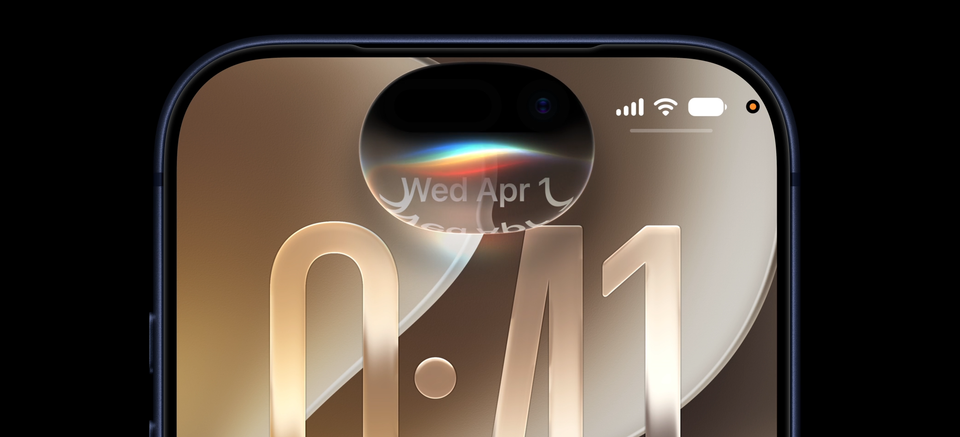
From a pure AI perspective, nothing Apple showcased during their WWDC keynote yesterday was particularly groundbreaking. In fact, much of it featured capabilities long since available in other AI tools and services – in some cases, years ago. And guess what? That doesn't matter. Based on what we saw yesterday, Apple is set to win in AI. At least from a consumer perspective.
I know how crazy this sounds. It's not just that Apple has been viewed as behind in AI for the past few years, it's that they've been more or less a laughingstock given how they tried to roll out 'Apple Intelligence' two years ago and failed to the point of settling lawsuits around false advertising. But if Apple is actually able to roll out what they showcased yesterday – I'll get to the caveats below – and there's reason to believe they can this time, they're about to infuriate many people and companies across a wide swath of industries. That's because Apple seems on the verge of doing what they always do: watching new products and services come about and then jumping in later with a better user experience to win the day.
This annoys people because... they can't just do that! So and so was doing this long ago! FIRST! This is old! BORING! Lame. THEY CAN'T KEEP GETTING AWAY WITH THIS! We saw it all on display in response to the keynote yesterday. And Wall Street seemed to agree with the angry mobs, sending the stock down in after-hours trading.
I'm here to tell you that none of that matters. Apple Intelligence and the new 'Siri AI' may seem underwhelming to those who live at the bleeding edge of AI. But 99% of people don't live there. And even more actually don't want to live there, but feel the need to in some ways lest they feel like they're being left behind in our Age of AI. If ChatGPT showed AI to the masses, Apple is set to bring usage mainstream.
I understood this immediately when I saw Apple's VP of Siri Engineering, Mike Rockwell – the man tasked with fixing Siri – do his demo during the keynote. It was simple and natural and that was the point. All he was doing was holding down the Side Button (maybe they should rename it to the Siri Button?) and talking to Siri AI. He didn't have to load up Terminal. He didn't have to download some coding app. He didn't have to download any app. Right out of the iPhone box, Siri AI will just work.
Well, provided Siri works, of course.
That's why this demo was key. While it wasn't live – and it would have obviously been more effective were it truly live, on-stage – it was clearly shot in real-time. There were slight delays here and there that weren't edited out. This was obviously intentional on Apple's part, to show you that unlike say, two years ago, this isn't vaporware. This is Siri actually doing things. Things she was previously not capable of doing.
Again, much of it wasn't particularly impressive from a pure AI perspective. But context matters – here, quite literally. This was always the promise of Apple Intelligence, that Apple would be able to pull in all the iPhone knows about you to handle any query and augment that with "world knowledge". Apple was unable to do that two years ago, but now Google is here to save the day. The fact that they got an actual shout-out tells you just how vital they are to this effort. Yes, Apple "distilled" Gemini to make their own, new "Apple Foundation Models", but it's the heavy-lifting that Google did in training these models which is going to make this all sing for Apple this time.
So why not just use Gemini? After all, there's an app for that. Well, you could and many will. But many more will not simply because Siri is baked in at the system level. This gives it capabilities no other AI service can match – at least until regulators try to force Apple to give others such access. But even if and when that happens, years down the line, the power will remain in the default. In not having to download and open an app, but in simply needing to hold down a button or saying "Siri" and everything just working.
Back to Rockwell's demo, the key to me was that the entire thing was done vocally. Certainly part of that is because it makes for a better demo than typing, but it's also likely how a lot of people are going to start using Siri AI. I say that because it's the way I interact with AI much of the time already. Perhaps I'm biased, but I also see the way my children have used Alexa and the like for years. They're growing up learning to use computers in more "natural" ways – not with a mouse and keyboard, but with touch and voice.
Obviously there are going to be times when you don't want to or can't use voice, but I highly suspect it's going to become the go-to way to interact with AI for many use-cases. And that's why we're about to see a rush of new devices hit the market focused on that interaction model. But just as we learned about cameras when the iPhone launched nearly 20 years ago, the best AI device is going to be the one you have on you. And at least for the foreseeable future, that's the iPhone.
That's what these demos were about yesterday. The iPhone is now an AI device. And so is the iPad. And the Mac. And Apple Watch. Even the Vision Pro.
Soon, AirPods. And a few other devices that Apple is clearly cooking up. And yes, Meta and others are already in the market with such devices, but they don't have the iPhone. But they still need the iPhone. And that's a problem. It will be a bigger one once Apple rolls out Siri AI.
Only Google and perhaps Samsung can meet Apple on the battlefield here thanks to their own smartphones. But while Google controls Gemini itself, they're going to have a hard time matching the product experience on every device beyond their own Pixel phones. And those hold a tiny sliver of the market. Google probably should aim to make the Pixel devices bigger to match Apple here – and perhaps their partnership will illuminate that opportunity, not unlike those early days of the iPhone. But that will involve complicated trade-offs with the broader Android ecosystem, including, yes, Samsung.
This is Apple leveraging their fully-integrated approach once again. The surprise is that they're seemingly able to do it without building their own frontier models from scratch. But they've perhaps lucked into a market where competition abounds and so Google, OpenAI, and Anthropic all want to compete for their business. They might suggest they didn't want that business now that Google won it, but obviously they do. Who would turn down access to billions of highly engaged, active, and lucrative users?
Down the road, it's inevitable that Apple will have to do more on their own. Again, Google may force this issue once they shift focus as they always inevitably do. And we may be at the point where LLMs matter less than "World Models" at that point. But for right now, Apple did exactly what they need to do in order to "catch up".
Again, that doesn't mean they'll be at full parity with everything that Anthropic, or OpenAI, or even Google can do with their AI at the moment. But for the masses, for Apple's purposes, most of that won't matter. It will only matter if one of those players has a true product and/or consumer use-case breakthrough. And of those players, OpenAI was the best at creating those. But now they're reorienting their business around coding and enterprise use-cases. Because as Anthropic quickly showed everyone, that's where the money is.
But that's not where the money is for Apple. Their money is in selling devices which in turn leads to them selling services. There will be some level of AI upsell here with iCloud+, but it won't be to the same extent as the other AI players. And while never-say-never with ads, you can probably forget about those anytime soon for Apple too. That's in part because a huge part of Apple's pitch here is privacy. To the point where Apple was fine taking shots at their partners during the keynote, noting, for example, that while other web browsers with AI "track your every move" – I wonder who makes the most popular web browser in the world with AI now baked-in... — Apple will not do that.
But the biggest direct shot came early on from Craig Federighi: "Still, some appear to be racing forward, seemingly pursuing AI for the sake of AI. Without regard for the people, all of us, that it’s ultimately meant to serve." Gee, wonder who he could mean by that... Perhaps Apple's big AI partner from two years ago? The one, it should be noted, currently considering legal action against Apple over the failures and shortcomings of that partnership...
AI's perception issues are also an angle Apple is going to heavily hit upon because Apple has a level of consumer trust that basically no other tech company enjoys. And in an age when the world – and the US in particular – is worried about where AI is about to take us and perhaps displace us, Apple can offer a more credible story of simply leveraging the technology as a tool for humans to use.
To that end, while everyone is busy chasing down the promise of agents, bulking up their offerings into "super apps" so as to route such work through the desktop, Apple just showed off an agent fully running on a phone. Or an iPad. Or a Mac. All pulled together via their own new app called, wait for it: Siri. Not a super app, in fact, just a super simple app.1 A way to collect and continue your AI workflows across devices. But one that is also not necessary because Siri lives right there, in your Dynamic Island (or Spotlight on the Mac), always ready.
It can see your screen in ways that would require about 15 different levels of permission with Claude. Which is, of course, a good thing to protect users from themselves – something which will undoubtedly be one of the key lessons from the OpenClaw movement. But again, Apple has a level of trust that others can't match. And a device base that others can't touch.
That's going to turn Visual Intelligence into perhaps the most profound shift in all of this. It frankly already should have been the case, but Apple buried it previously. Now it's going to be front-and-center in the most-used app for many people: Camera. It points to a future where wearables don't just augment our reality visually, but they do so with information without the need to pull out your phone. Yes, Meta is already headed there, and others, including Apple, are soon to join, but it seems like we're not quite there yet. For now, it's a great use case for the iPhone camera and a fun demo for the Vision Pro.
All of this adds up to a world in which Apple seizes control of consumer AI. Well, unless you're in the EU – enjoy the regulations! Or in China – enjoy the oversight! But also in those places too, eventually.
If It Works...
Having said all that, it's caveat time. In my preview yesterday, I called back to the famous Steve Jobs "it just works" saying and while watching the keynote, I was quick to append a new variation "if it works" to many of my live-tweets. It's funny, but necessary!
Basically all of the above was also true two years ago when Apple Intelligence was first unveiled. But it ended up only being true on paper, of course. It's possible that the same thing happens this time, but you have to believe there's no way in hell that Apple moves forward with devoting 45 minutes of their 1 hour 15 minute keynote to AI if they're not confident this time.
The bigger issue may be that Siri AI doesn't fail to launch, but just isn't very good upon launch. Here, we can look back upon the past 15 years of Siri. Every year we've been promised that Siri is getting better. And while that may have been true in small ways, relative to the state of the art, first with Alexa and now certainly with the LLMs, Siri has been made to look worse relatively speaking, every year.
Again, I believe Google's involvement is what breaks this cycle. But there are a lot of questions there still. What happens if/when Gemini is constantly updated? Does Apple need to re-distill each time? Do they update their models on their own apart from Google? Do we need a full software update to update the models given how much is apparently going to run locally?! All of this would suggest a company that still may not be quite ready to operate in the Age of AI, where the state of the art changes constantly.
The good news is that increasingly, most day-to-day usage won't require the state of the art. And, in fact, it increasingly may prove too expensive to use the state of the art for most tasks. Again, Apple's timing could be good here. But we won't know that for sure until Siri AI is out in the wild and competing with say, Mythos.
Then again, I'm not sure how much they will actually compete. There will always be the AI power users – of which I'll certainly be one – but most users will not be AI power users. They'll be content to use the default, provided the default is good enough. But that's underselling Apple here since it's really about having a good enough base layer for things like world knowledge mixed with the contextual stuff around your personal data that only they can do. While it sounds simple, this complexity is not easy. It's entirely possible that we see a world where most iPhone users use Siri AI for, say, 80% of their AI needs and then pick another model/service for the other 20%. Or maybe it's even more granular, with two or more other AI services filling in specific niches. Again, we'll see.
But what I see based on what I saw yesterday is a world where Apple takes the AI consumer lead in relatively short order. Millions of people next year walking around talking to Siri AI, asking her all sorts of things and tasking her with all sorts of things. It's a mixture of the power of the default, Apple's own superior product instincts, OpenAI ceding the consumer high ground, Google being stretched in a million different directions beyond consumer (and, of course, helping out Apple here), Microsoft never being good at consumer, Anthropic not caring about consumer, Amazon not having a smartphone (yet?), and Meta not having the iPhone.
After being left for dead in AI, everything is coming up Apple, again. How annoying for some – THEY CAN'T KEEP DOING THIS. AI becomes a new reason to get an iPhone. Forget AI PCs, this is the first true AI device. If it works.
1 Which needs a better icon... ↩