
An Actual AI PC
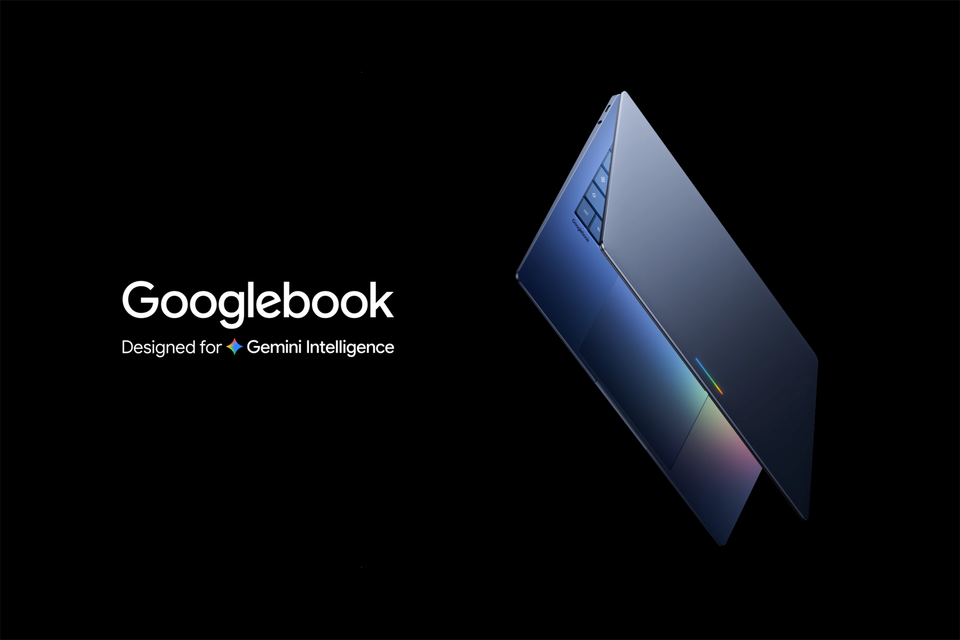
First, can we talk about the name? 'Googlebook'.
I really, really don't understand why you unveil a product that is clearly going to be marketed around its AI capabilities with a name that's associated with the historic web search capabilities. Yes, Google is an entire company that obviously now does far more than Search, but most would still associate the word with such functionality – it's the "Kleenex" of that industry! A verb! When I hear 'Googlebook' I don't think, "oh nice, a new AI product." I think, "is it some kind of new Search hardware?" Or worse, I immediately think of Google+ – this sounds like what we used to joke the name of Google's Facebook competitor would be!
Wait, isn't there also another product called Google Books? Yes, yes there is. Google, you have a major SEO problem here. Also, will the universe collapse upon itself if you access Google Books on Googlebooks?
It also, of course, sort of sounds like "Gobbledygook". I'll go ahead and use the definition that Gemini pulls up: "language that is nonsense, overly technical, or confusing." Sounds about right here. I do sort of like the paired 'o' parallels on either side of the name – some mild '007' vibes – but it's sort of a ridiculous mouthful of a name. Yes, 'Google' itself is famously nonsensical and fun, but pairing it with another 'oo' word conveys baby speak a bit too much?
Obviously they must have debated it, but again, given the AI element, I would have gone with 'Geminibook'. It's still a mouthful, and a bit bland. But they could have had some fun and styled it as 'GeminiBook' – evoking Apple's old 'iBook' branding.
Even more fun? 'aiBook'! But that may have actually drawn a lawsuit from Apple. Though I'm not sure how much they could have done there? But since they're partners in AI now, perhaps best not to poke that bear...
'Chromebook Gemini'? Sort of lame, but more straightforward? Follows the 'Chromebook Pixel' since-discontinued branding convention. Then again, the intention is to break away from just being about Chrome – and specifically ChromeOS – here, clearly.
That points to another oddity. They apparently don't yet have a name for the OS these machines will be running? It's clearly the ChromeOS/Android hybrid that has long been rumored (and slightly leaked) as "AluminumOS", but I guess the branding team was exhausted after coming up with 'Googlebook'. Which is sort of funny because if I think of ChromeOS + Android, I might actually think 'GoogleOS' makes some sense there! It's famously Google's two OSes, combined!
Or how about this: 'gOS'? Again, Apple might be annoyed (though not as much as they would be about AiOS!), but it would allow Google to not only leverage the above but rope in Gemini too!
Maybe there is still hope for one of those. Maybe they're just saving it for the actual IO conference next week? We'll see!
Anyway, with 500-ish words about the branding out of the way, the device itself makes sense at the highest level. This is the AI PC that Microsoft tried to do with 'Copilot+ PCs' (I take back everything bad I said about your branding, Google), but done right. Well, maybe. But hopefully as it's Google, not Microsoft. The latter I thought also had some correct high-level ideas around trying to reconstitute Windows and PCs in general around AI, unfortunately, their execution has been... sub-par. Which is a nice way of saying "shit".
In fact, they've had a few "oh shit" moments with the big attempt to push the 'AI PC' movement. First there were some major security concerns (par for the course for Microsoft). Then there were some major gaming concerns (par for the course for Microsoft). Then there were some major OS bloat concerns (par for the course for Microsoft). Now they're slowly but surely pulling back Copilot from every possible surface (and Surface), having annoyed their users to death.
It just feels like Google can't possibly do worse? And that's not to mention the fact that Gemini, the AI products and models, are actually solid. How they'll productize them into a full laptop experience remains to be seen, but the technological capabilities will be there, clearly.
And one of the main new elements they're touting right now is "Magic Pointer" – basically bestowing AI magic upon the old standard mouse cursor. Others have tried to use the text cursor (or caret) to this end. It's a good idea, but hasn't really caught on. The mouse cursor is arguably more interesting because it's how you digitally point at something. It's risky because there are going to be some real UX concerns in messing with such a standard, only for one type of device/OS. But it's certainly worth trying if you're Google.
It's sort of taking the 'Circle to Search' idea from mobile and porting it over. But it goes further too, as some fun early demos showcase. Performance issues aside (as they're running remotely), it does feel like a natural way to say, manipulate an image. Just point at an area with your cursor and say "put a bird on it".
And it should help bridge the gap between mobile and desktop as touch becomes more ubiquitous across all devices – even MacBooks at some point soon! This is just a more natural way of doing some things than using a text prompt, obviously.
As for Chromebooks. Google wants to make it clear that they're not going anywhere – touting 60%+ of the US education market – but they also clearly were never able to make them robust enough to challenge MacBooks, or the higher end Windows laptops. Again, they tried with the Pixel model, but ultimately Chromebooks found their place at the lower-end of the market, and environments like schools where most of what you need is in the web browser.
Oh yes, and the MacBook Neo is coming for that market. Hard.
For many other types of users, ChromeOS could just never quite cut it. I tried using a Chromebook Pixel as my main machine once – I lasted about a week. I don't know if the ability to also run Android apps helps with that since those apps are obviously going to be tailored for phones (and I guess some for tablets), but it probably can't hurt? Again, unless it adds more complexity from a UX perspective. Hard to say for sure right now, as the focus is pretty clearly on the hardware here.
And beyond the high-level notion of what the devices are, there are not many more details. This chat with Google VP John Maletis gets at some – notably, that there will apparently be chips from Intel and Qualcomm – so x86 and ARM-based chips? Queue the scary flashbacks to the early days of Microsoft Surface. Are we going to get a 'Googlebook RT'?
And while Dell, Lenovo, HP, ASUS, and Acer are all on board (which Microsoft can't love, obviously), Samsung, Google's key partner on Android itself, is nowhere to be found... Also not being discussed: will Google itself make Googlebooks? The "nothing to share" comments sound a lot like "yes". So yes, there will likely be 'Google Googlebooks' alongside 'Dell Googlebooks' and the like.
With that, we're right back where we started, in branding territory. 'Googlebook' is going to take some getting used to. Then again, it's not really a product for me. Or maybe it is. I'm intrigued by an AI-first laptop, of course. But I was also intrigued by a browser-first laptop back in the day. Ultimately, it just wasn't enough. Will Googlebook be? Way too many TBDs to know right now.
One more thing: I do like the notion of the 'Glowbar' being the unifying design element to showcase what is a Googlebook and what is not. The Chromebook Pixel had something similar, and it was nice. It obviously called back to the old glowing Apple logo that used to be ubiquitous across classrooms until Apple turned off the lights, quite literally. I'm guessing Google is hoping you'll start seeing those 'Glowbars' pop up, announcing themselves in a similar manner. Though it could be cool if they actually did something beyond glow? Perhaps indicating when Gemini is working? Though that takes my mind immediately to Cylons...